Copyright 2002 – by Steven McFadden
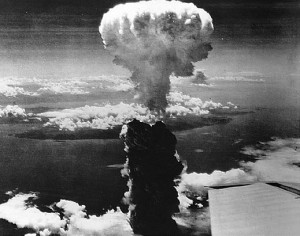 The fire that was ignited 57 years ago on August 6, 1945 when the Enola Gay dropped the first atomic bomb on Hiroshima, Japan, was ceremonially extinguished by a band of pilgrims May 27, 2002 at Big Mountain on Black Mesa in Arizona, in a high desert range sweet with the smell of sagebrush.
In 1945 when the “Little Boy” bomb detonated 2,000 feet above Hiroshima, the city was instantly shrouded in an awful cloud. Witnesses beneath the cloud remember that they “saw another sun in the sky…” When the wave of light, heat and wind from the flaring atomic sun reached the ground it roasted to fine ash all that came before it. The wave raced outward until it reached the mountains on the edge of Hiroshima, where it was reflected to roar again through the city center. Over 140,000 human beings died during or shortly after the blast. Many more lingered — dying later, or developing genetic mutations.
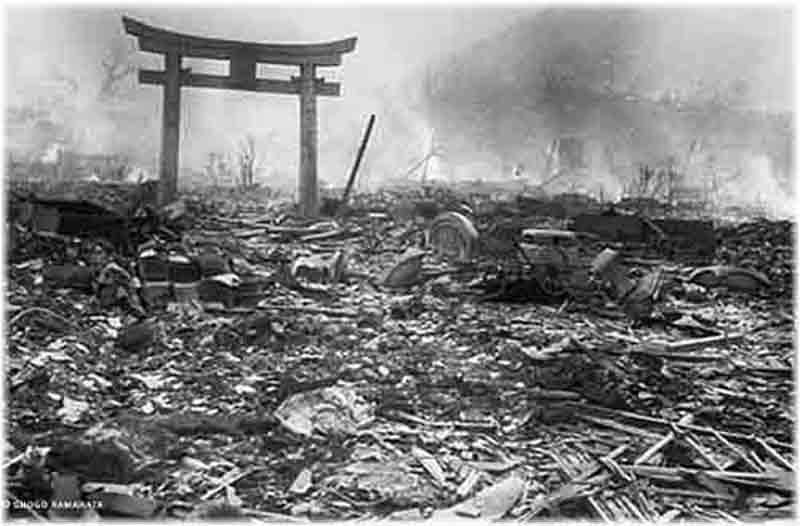
Aftermath of the nuclear bomb.
A man named Tatsuo Yamamoto recovered embers from the Little Boy blast 57 years ago. His family, with the help of a nearby monastery, has tended the flame continuously ever since, feeding it with prayers of forgiveness, understanding, and peace. This is the source of the flame the pilgrims carried across America, the flame they recently extinguished on Big Mountain.
The Hiroshima Flame Interfaith Pilgrimage brought the flame to America in January, 2002 and then carried it cross-country, walking West to East. They began in Washington State at the grave of Chief Seattle, and took their final steps toward the East in May in New York City at UN Headquarters and the site of the World Trade Center disaster.
(To read about the background of the walk, and the walk’s earlier pilgrimage to the emergence point of Los Alamos, New Mexico, click here).
While led by Japanese Buddhist Nuns and Monks, the prayer walk included people of all colors and faiths. They walked not in protest, but rather with prayers of hope to end war and destruction. The walkers concluded their epic pilgrimage with multicultural ceremony, including traditional elders of the Hopi and Dine’ (Navajo) Nations at Big Mountain, one of the high sacred places of North America.
Four Corners: Spiritual Center of the Continent
While the Hiroshima Flame borne by the walkers has notable significance as a living representation of a redeemed spirit, the place where it was extinguished also carries immense importance.
Four Corners is a sacred region in the Southwest, long appreciated and honored by traditional peoples. Although the relationship between the larger Dine’ and Hopi governments, and between those nations and the US government and corporations, has often been a morass of conflict and confusion, the sacred teachings about the Four Corners handed down from antiquity echo — at some level — in the soul of every person involved.
Dine’ tradition holds that at the start of the present epoch of world history (Glittering World), the Holy People put four sacred mountains in four different directions: Mt. Blanca (Colorado) in the East. Mt. Taylor (New Mexico) in the South, San Francisco Peaks (Arizona) in the West, and Mt. Hesperus (Utah) in the North. In this manner, they established Dinetah, readily knowable boundaries.
Within the bounds of the Four Corners lies the formidable and imposing Black Mesa, and the ridge that runs along part of it, called Oyama by the Dine’, also known as Great Mountain or more widely as Big Mountain.
To the casual observer, Black Mesa seems a barren and inhospitable place, devoid of value. But to traditional wisdom keepers, this is high holy ground, an energy center of importance to the overall balance of life. For others, Black Mesa is a storehouse of natural capital, just waiting to be converted to bankable wealth. Evidence of this material value lies in the gangling high–tension power poles and lines which picket the mesa, the exceedingly wide and deep roadways, and the industrial installations of every description, including a private airport for mining executives.
Ceremony at Big Mountain
When the Hiroshima Flame Interfaith Pilgrimage arrived at Big Mountain about Noon on May 27, the pilgrims walked a half mile out onto the range, scanning the sagebrush and the blue sky, and chanting their familiar Namu Myo Ho Renge Kyo. Their combined voices sent the chant ringing widely across the mesa.
The pilgrims spiraled sunwise around a center point on the range, forming a multiracial hoop of about 50 human beings. In the center of the hoop, the native elders and walkers kindled a small wood fire from the Hiroshima Peace Flame. It roared to life.
When the fire was burning and buckets of water had been blessed, the pilgrims spiraled single file into the fire and to the bucket of water. One at a time, they anointed themselves with the water, and then with prayer each flicked a few droplets on the slowly dwindling flame.
The hour when the Hiroshima Peace Flame was extinguished, 57 years after it was sparked to life in an unprecedented nuclear conflagration, was a quiet, sweet, solemn moment in the high desert. It was marked in the distance by birdsong and children’s laughter. The Sun was high overhead. The people in the circle were relaxed and at peace in friendship. They walked off the range quietly, and down a dirt road.
Then came whirlwinds. The breeze had blown freshly all day, sweetened by the newly sprouted sage, and it made standing in the open sun comfortable. But after the ceremony things changed. Powerful whirlwinds arose in succession and presented themselves directly before the pilgrims with a harsh, dusty moan. Just as the Wind Nation had spoken dramatically weeks earlier as the walkers carried the flame into Los Alamos, New Mexico, so it spoke again through mini–tornadoes that swirled right up to the walkers, then changed direction. The whirlwinds did no damage, but demanded attention.
Until Human Beings Live in Harmony
After the ceremony the walkers and several residents of Big Mountain gathered to share a simple feast, and to talk among themselves in the shade of a shed. Several traditional elders addressed the walkers at this time, to thank them for coming and to speak of how they see things in the world.

Hopi Grandfather Martin Gashweseoma
Hopi Grandfather Martin Gashweseoma, 78, spoke briefly. He reminded people of the crucial importance of the Four Corners Region, and of Black Mesa and Big Mountain in particular.
As he had explained at UN headquarters in 1993, and on many other occasions, Grandfather Martin told of how, at the beginning of the present–day 4th World, by Hopi tradition, the people who had survived the great flood that cleansed the Third World assembled at Four Corners. From there they spread out in the Four Directions to live out their destinies.
Before the human beings parted ways, Creator established Four Nations, told them they would come together again towards the end of this Fourth epoch, and gave each the responsibility for one of the Four Elements: the Black Nation to keep the water; the Yellow Nation to keep the air; the White Nation to keep the fire. The Red Nation was instructed to caretake the Earth, hesaid,to hold fast to traditional ways, and to protect Four Corners at all costs, and without violence.
They were told that there is great power under the land. If this power is allowed to escape, he said, it would result in great destruction.
Traditional elders recall in their ways that the Hopi were instructed to remain as custodians of this region while war still stalks the world. Four Corners is a microcosmic image of the entire planet. There are specific knowings that refer to Black Mesa and Big Mountain, teachings that warn they should not be dug into.
Still Under Siege
There is an ongoing war for Big Mountain, a war older than a generation that is waged with legal edicts and bulldozers on one side, and prayer, song, and dance on the other. Because Black Mesa is a key center of spiritual energy for North America and the world, and because it represents a hornet’s nest of crucial karmic and environmental issues, it is an issue that should be of intense interest to everyone.
It is a bitter irony that American corporations and government have targeted one of the principal sacred sites on the continent, and exploited it with technology, ripping it open to fulfill explicitly material intentions.
Speaking in the Dine’ language (interpreted by a relative), Grandmother Louise Benally told the walkers, “Here we are still at war with the U.S. Government over energy. I feel like I am still living in the 18th Century, when the cavalry started harassing us. Dineh people remain on Black Mesa, and oppose the forced relocation of traditional peoples so this place will not be taken over for the coal and uranium that are here. We have a spiritual responsibility to this place.”

Black Mesa
For over 20 years, Peabody Coal Co. has been strip mining Black Mesa for coal, and consequently, residents believe, reducing the water table and causing radioactive pollution as uranium deposits are disturbed. Over 30 billion gallons of water have been sucked up from the aquifer at Black Mesa by coal company pumps, then mixed with pulverized coal, and used to slurry the mixture to a power plant in Nevada, where the guts of sacred Black Mesa is burned to provide power for the Las Vegas strip. Meanwhile, family wells on Black Mesa have dried up. So have the springs. Some elderly people in the Black mesa region must travel up to 50 miles to get drinking water.
Crisis is upon the Four Corners again this summer. The fire element is wildly out of balance, and that has impacted everything. No one has ever seen a year like 2002. Wild fires are burning hundreds of thousands of acres throughout the Southwest. Elderly Dine’ who have herded their sheep, goats, and cattle here for generations, say they have never seen a drought so ferocious. More than 7,000 stock ponds have dried up across the Dine’ reservation. Thousands of head of livestock are dying or expected soon to die from lack of water and grazeable forage.
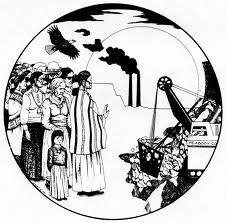 The assault on the material resources of Black Mesa continues. Peabody Coal Co. is planning on expanding operations by opening a new mine, which will ultimately infringe upon Big Mountain itself.
“It hasn’t changed,” Grandmother Louise Benally told the pilgrims. “The feds still want our energy, and they still want our land. There has been coal mining here for 20 years. Now the land is drying up. We feel ourselves drying up, too.”
Black Mesa elders remain determined to stay on their ancestral lands. They need support to hold this spiritual center. Some of the strongest support they have received over the years has come from the people of the Yellow Nation.
Spiritual Friendship
Twenty–five years ago a friendship was inaugurated among the traditional Dine’ and Hopi at Big Mountain, and the Monks and Nuns of the Nipponzan Mihogi Order. The friendship began during “The Longest Walk,” a pilgrimage organized by various American Indian movements. This walk journeyed from the Pacific to the Atlantic to call attention to a host of issues of concern to indigenous peoples.
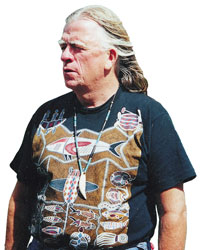
Pilgrim Tom Dostou
Traditional elders from the Four Corners region decided that the Big Mountain issue should be a part of this effort. Over the course of the walk they informed all the Indian nations about coal mining on Black Mesa, and the relocation of Dine’ people. Traditional people have been resisting government–mandated relocation for over two decades. Despite their resistance, thousands of Dine’ men, women, and children have in recent years been forcibly removed to a barren area, far from their ancestral homes.
Buddhist Monks and Nuns joined the Longest Walk, and they were touched by what they learned about Black Mesa. They walked and prayed the whole way alongside the Indians. Later, through the 1980s and into the 1990s, several Buddhist people lived at Big Mountain to help defend it. In this way traditional Dine’ and Hopi and the Japanese people became a family. As portrayed in the newly released film, Windtalkers, earlier in history, during World War II, they had been enemies.
The friendship deepened when people of the Yellow Nation joined people of the Red Nation at Sundance. According to long–held Lakota tradition, the Sundance ceremony was to someday travel throughout Turtle Island, and to bring many Nations into the Sacred Hoop of Unity. The first Big Mountain Sundance was held in August 1983.
The intention of the Lakota Sundance in Dine’ country was, and remains, for purifying body and mind so that the people of Big Mountain can defend the ancient lands. The people dance to strengthen themselves spiritually. Although harassed and challenged, the Big Mountain Sun Dance still happens every summer.
Steps Along the Trail
With this background of friendship, it was natural that the Hiroshima Flame carried by the walkers should, in the end, guide them to Big Mountain, not far from the place where the uranium used to build the Hiroshima bomb was long ago dug from the Earth.
After the feast and the remarks of the elders, the walkers had an opportunity to reflect on their pilgrimage. They said that, as a group, they felt good about what they had accomplished. They said they had been faithful, and that they listened to spirit the whole way. They never made decisions on any other basis.
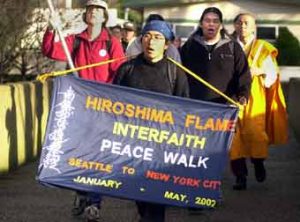 The Hiroshima Flame Interfaith Pilgrimage had its origins in the year 2000 under the inspiration of Tom Dostou while he was in Japan. At that time he was entrusted with a spark of the Hiroshima Flame (the source flame remains burning in Japan). Tom conceived the vision of returning the flame to where it had come from — not as a protest, but as a necessary deed of spiritual redemption, because not only the people of Hiroshima had died, but also many native peoples were poisoned by the uranium dug up, without spiritual permission, on their lands.
Tom passed his vision to Jun Yasuda of the Nipponzan Miyohoji Buddhist Order. Then they started walking. They walked 1,300 KM in Japan, and then brought the flame to America. Over the months and miles of the walk, there were many remarkable developments. At the start, they could find no plane willing to carry the flame across the Pacific to North America. But at last they secured a boat ride to Hawaii, and by serendipity arrived at Pearl Harbor Dec. 7, 2001 — 60th Anniversary of the Pearl Harbor bombing.
Sister Jun Yasuda at Oyama
That bombing raid by Japan killed over 2,400 people, crippled the US Pacific Naval Fleet, and radically accelerated the world war which later ended at Hiroshima and Nagasaki.

Kahunas at Pearl Harbor
In Hawaii the pilgrims were welcomed by a delegation of Kahunas, the traditional Medicine People of the islands. The Kahunas took them to the former site of a sacred shine on the island of O’ahu, overlooking what had once been an uninhabited tropical lagoon. This quiet lagoon, held as deeply sacred for generations by the indigenous people of the Hawaiian Islands, was dredged and bulldozed to create the military base of Pearl Harbor. For the Kahunas, there was an obvious karmic link between the desecration of one of their sacred sites and the bombs that later rained upon the military base.
The Kahunas and the walkers also journeyed to Mount Kilauea, carrying the Hiroshima flame into the volcano’s caldera. The pilgrims arrived in Mexico on Dec. 15, for the major spiritual festival honoring Our Lady of Guadalupe.

Hiroshima Pilgrims at the final ceremony.
Then they walked for months from the grave of Chief Seattle on the West Coast past nuclear installations in Hannaford, WA, Los Alamos, NM, Huntsville, AL, and elsewhere. Walk initiator Tom Dostou rejoined the walk in May in New York City for the UN and World Trade Center vigils. Thus the walk finished with the circle completed, the hoop whole.
“We followed the flame,” the walkers said. “We were not carrying the flame, but carried by it.” At the end, the flame led them to Big Mountain to add the awakened forces of their pilgrimage to the defense of the Earth and the cause of peace.
– 30 –
Nota Bene: Roberta Blackgoat, respected Big Mountain elder and lifelong defender of sacred lands, died in April, 2002 at age 84. For obituaries check the Big Mountain web sites
To learn more:
 The flame, flickering in a lantern borne by pilgrims on foot, was largely unrecognized and unacknowledged in Los Alamos. Still, the pilgrims completed the work of spiritual redemption they had come to accomplish, and then they walked on toward the East, planning to arrive in New York City on May 12, 2002. Their visit to this place of fire is of marked spiritual significance.
 In the beginning, it is said, the four nations lived together as one and shared their gifts. Then came a time when it was necessary for spiritual growth that the Four Nations disperse to the Four Directions and live apart. Over time they could develop as human beings and master the mysteries of their element for good or ill, according to their free will. Earth, air, fire and water — the peoples went apart.

 The flame the pilgrims carry was ignited 57 years ago and has been tended with prayer ever since. In1945, after the atomic bomb was dropped on Hiroshima, Japan, a man named Tatsuo Yamamoto walked into the ruins of the city to look for friends and family. In shock and anger, he collected some of the embers still smoldering from the bomb and carried them home.
 The nuclear bomb is an ultimate expression of materialism. When the atomic scientists of Los Alamos took the secret of the atom — the fundamental particle of matter — and developed it into a weapon of mass destruction, they unleashed a scathing, wrathful demon of fire rather than a higher angel of warmth and illumination.

 The glyph was carved into the rock face of the outcropping thousands of years ago by the indigenous Pueblo peoples, whose descendents still live nearby. There are such petroglyphs all over North America, serving as signs and signals of importance to native peoples.
 From the place of Avanyu, the walkers proceeded — drumming and chanting each step — about seven miles to Tsankawi, a prehistoric site that is now part of Bandelier National Monument. Tsankawi is a spectacular place high on a mesa overlooking the Jemez Mountains to the West and the Sangre de Christo Mountains to the East.
 The wind people, the messengers, brought the flame home to its point of origin, having purified it with their chants, prayers and incense. They offered it to the people of the city without rancor, recrimination, or challenge. They offered the flame with understanding and hope. And then they walked on.
 Also on that day, to sound an alarm about the rapidly growing danger of a nuclear conflagration, the Bulletin of Atomic Scientists moved their famous Doomsday Clock forward two minutes closer to midnight. The scientists wanted to highlight the dramatically mounting dangers of political instability, the wide availability of nuclear materials, terrorism, and the aggressive unilateral stance of the US government.
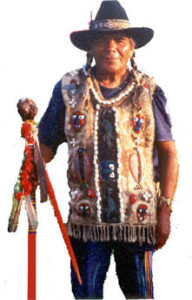 An elder of the Yaqui Indian Nation, and a Nahual (man of power), Cachora has remained a mystery figure for decades. But now he is coming forward from his homeland in the Sonoran Desert of Mexico into the public realm. It is time for this, he says. Chachora says says he is the real man who is portrayed as the enigmatic shaman don Juan in the series of books by Carlos Castaneda: Journey to Ixtlan; The Teachings of Don Juan; and so forth.
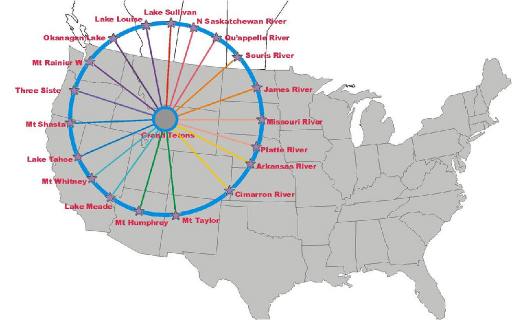
 While dwelling amid the high mountains along the North American Continental Divide, Bennie LeBeau of the Eastern Shoshone tribe experienced a torrent of dreams and visions, especially in 1999. The visions directed him to set in motion the plans for a massive Medicine Wheel Ceremony.
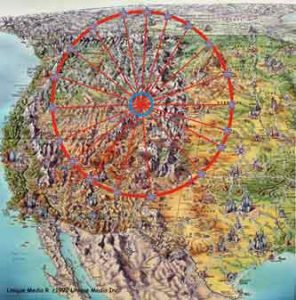 A Medicine Wheel is an ancient spiritual tool with a history of widespread use all over Turtle Island (North America). Stones are set to mark the Four Directions of North, South, East and West, and also of other major points. In this manner, if done with knowledge and respect, a sacred space is defined. Within that space, the people can direct thoughts, feelings and actions toward a unified idea.


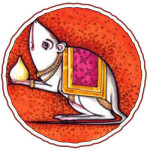 In the Medicine Wheel teachings of Turtle Island the South is a direction sometimes represented by Mouse. Mouse is so small and defenseless against the rest of the world that he must rely on trust and instinct to live. Much larger forces of Spirit are at work in the world, and Mouse understands how humble a creature he is in relation to all this. But good and surprising things can happen when trust leads Mouse to make a bold move for survival, guided by Spirit.
 In the context of Grandfather’s words, the ravaged land all around Turquoise Mountain bespeaks an ugly story. Over many years
 The call for people of all nations, races, and traditions to participate in this massive Medicine Wheel ceremony comes at a time of widespread military conflict, and of profound environmental damage to the earth, the wind, the fire and the water. It is also a time of intense culture war.


 Of note, Yellowstone Park is also the site of a legal, on-going Buffalo slaughter. The Buffalo are killed to prevent them from becoming “too numerous.” In native understandings, Buffalo are widely considered to be healers of the earth. The places where their hooves touch the soil are especially fertile.
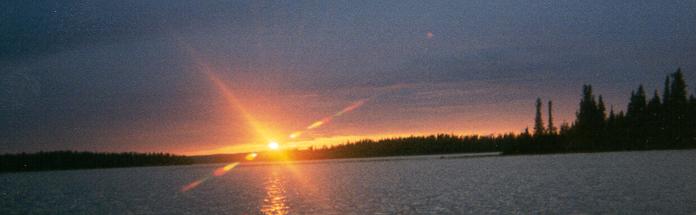

 For most of us, for much of the world, the heart of Winter Festival lies obscured behind the veil of outer celebration. Yet the veil is translucent. Through it, with a willful gaze, we may behold the mystery of the low-hanging Sun as it seems to stop, heralding the onset of the north wind and the clear, hard bite of winter. Through the veil we also may sense something else just beyond our grasp – something vast, poignant, resonant.
 Like reeds in a basket, human life is interwoven with the life of the earth. All our food, water, clothing, and shelter come from her body, and arise with her natural rhythms. Our skin and bones are likewise formed of her stuff. Our moods, thoughts, and capacities are not wholly independent of this relationship.
 One illuminating expression of the yearly cycle and its festivals is presented by Evelyn Francis Derry in her book,
 At the time of the Winter Festival we are naturally drawn to contemplate the course of the Sun — it hangs so ominously low in the sky we cannot help but notice it. As the Sun conquers the cyclical darkness, which has been deepening from the moment of Summer Solstice until Winter Solstice, there is a sacred pause in the collective breath of Earth and humanity — a moment when we can recognize that we, too, may ultimately triumph over the darkness in our lives.