A quarter of a century ago, I had the privilege of serving as National Coordinator for Earth Day USA. I partnered with the Seventh Generation Fund to help bring the Council Circles project and curriculum to hundreds of North American communities.
Now I’m happy to bring forward a book that again brings a council circle of wise voices together to offer native and agrarian wisdom ways forward for human beings and for our earth.
The way we tend the land that produces our food, and the way we eat, are the key factors in our physical, moral, and spiritual survival and development in this tumultuous era.
Elizabeth Wolf, my wife and partner, has played an indispensable role in bringing this book to life in a powerful and elegant way. I’ve dedicated the work to her, with love and appreciation. ~ S.M.
Both the print and the eBook editions of Deep Agroecology are now available through Amazon, and soon also through other sales outlets
DEEP AGROECOLOGY
The Ways We Farm and the Ways We Eat Will Determine the Destiny of Life on Earth
While deep agroecology is new territory, it’s natural territory, not just for farmers, but for all people. Farms are the foundation of our civilizations, and that foundation is undergoing massive upheaval. We must be about building a new agrarian foundation that can support in a healthy, spiritually intelligent way the high-tech, digital waves of culture sweeping so profoundly around the world.
Farms and farmers can build that foundation, but only with the intelligent involvement and active support of people and communities who depend upon them for survival.
Table of Contents for Deep Agroecology
Introduction
Chapter 1 Right Names
Chapter 2 Industrial Farms and Food
Chapter 3 Elements of Agroecology
Chapter 4 Webs of Light and Life
Chapter 5 Elements of Deep Agroecology
Chapter 6 This is the Holy Land
Chapter 7 Tierra Viva
Chapter 8 What Are Farms For?
Sources
Index
Acknowledgements
About the Author
Selected Reviews
Endorsements “Thank you, Steven McFadden, for rich and moving clarity, as you weave for us the many threads of ‘deep agroecology.’ The vision you capture is not a choice, for in this dire moment for our Earth, it is life’s only possibility forward.” ~ Frances Moore Lappé, author, Diet for a Small Planet and cofounder of Food First and the Small Planet Institute
“Deep Agroecology is an engaging encyclopedia of why ecological farming is the roadmap to human and planetary health. McFadden challenges us to work within the interconnectedness of all life. Concepts as far ranging as modern physics, microbiology, spirituality, and social networks are woven together, leaving the reader with a new world view. A must-read for students of the good food movement…It did change the way I perceive the world — in a way that didn’t leave me running for the hills (as the scientist in me often does when scientific and spiritual worlds merge).” – Linley Dixon, Ph.D., Associate Director, The Real Organic Project
“Steven McFadden uses the words of farmers, scientists, philosophers, and indigenous elders to convey a deeper concept of agroecology that cannot be coopted by corporate agribusiness…The future of humanity depends on our heeding the wisdom of deep agroecology.” – John Ikerd, agricultural economist and author of Crisis and Opportunity: Sustainability in American Agriculture.
“First of all, let me just say that it is such a pleasure to read your writing, and I cannot say that about many people. You actually know how to write, which in truth means to pour spirit and meaning into earthly language. Everything I read was beautiful and felt true…This book is a little gem and very much needed right now.” – Robert Karp, former Director Practical Farmers of Iowa, and the Biodynamic Association
“Your many ideas are like lovely jewels, strung together.” – Alice Bennet-Groh, Temple-Wilton Community Farm
“A transformation of agriculture practices is essential for a sustainable future. In this well researched book Steven McFadden provides compelling information that is required reading for those invested in a better future for the planet and humanity.” – John Thompson: Eco-psychologist and founder of The Nature Code
“Steven McFadden, in his Deep Agroecology: Farms, Food and Our Future, beckons the reader to wake up to the cries of our wounded planet and our suffering farms. If we cannot heal our farms, our civilization has no future. Steven offers a way forward, by blending indigenous agrarian wisdom with contemporary tools of sustainability. Deep Agroecoology implores us to put into action our love for the planet.” – John Peterson, The Real Dirt on Farmer John
Resurgence Magazine on Farms of Tomorrow: “It is rare to come across any practical farming guide that sets out, from its inception, a set of principles that embrace social, spiritual and economic concerns on completely equal terms…The wisdom and clarity of philosophy are striking throughout.”
Whole Earth Review on Farms of Tomorrow: “This is the best book to access the Community Supported Agriculture (CSA) movement, including philosophical, spiritual, practical essays and how-to (including financial discussions). This is the source for tools, organizations, farms, and networks concerning the renewal of agriculture.”
The Call of the Land: An Agrarian Primer for the 21st Century “This book is just terrific…McFadden is dealing with sacred science, the sort of wisdom we require for our survival.” —LARRY DOSSEY, M.D., author of Healing Words and The Extraordinary Healing Power of Ordinary Things
“The Call of the Land provides an incredibly thorough guide for all who are interested in discovering or further understanding the changes taking shape across the country. In this surprisingly compact book, the author manages to assemble a meticulous overview of the people, places, and concepts in what he coins the ‘Agrarian Renewal.’ You will be amazed by the diversity and vision embodied in the movement so thoroughly and vividly described by Steven McFadden.” —ANA SOFIA JOANES, director of the film FRESH
“The Call of the Land is an important and timely primer on a resurgent agrarianism taking place around the nation. As the challenges of the 21st Century begin to bear down, we can take solace, and find pragmatic solutions, in the back-to-the-land work of progressive farmers, ranchers, conservationists, and many others. Hope dwells in the grassroots. This book is a great guide on where to look.” — COURTNEY WHITE, Executive Director, the Quivira Coalition, author of Revolution on the Range: The Rise of a New Ranch in the American West
“The great value that The Call of the Land offers is the encouragement that comes from seeing what so many others are doing to revitalize America’s agrarian roots and branches…Steven McFadden has pointed the reader to hundreds of grassroots efforts to join, emulate or use as inspiration to plant our own gardens in whatever form makes the best sense for each of us. A hopeful work!” – DEBORAH MADISON, author of Local Flavors, Cooking and Eating from America’s Farmers Markets, and Vegetarian Cooking for Everyone.
“In the face of widespread turmoil and resignation, The Call of the Land shows us that our hands, minds, and hearts, when used as one, are already healing ourselves and the planet earth. Author Steven McFadden reminds us that the seeds to a new future are being planted right now, that farms are meccas of cultural and ecological renewal, and that healthy agri-CULTURE is the sattvic incarnation of the Green Revolution. – FARMER JOHN PETERSON, Angelic Organics
“In this updated edition, Steven McFadden continues his significant work of identifying various agrarian projects where the vital link to nature is being restored. The Call of the Land serves as a valuable resource at a crucial, make-or-break juncture because there is just no ignoring Earth’s distress signals. “ – JULES DERVAES, Founder of the Urban Homesteading® Movement, Director of the film Homegrown Revolution
“We humans have lately entered into a collective techno-trance in which our primordial ties with land have been all but forgotten. Urban consumer lifestyles lead children to believe that food comes ultimately from the supermarket; that nature is merely something to be seen on dedicated cable channels. In reality, we are as dependent as ever on soil, water, weather, and biodiversity, even as we overuse, upset, and destroy these foundational elements of life. Steven McFadden helps us remember the essential, and points to the only sane path ahead–a profound emotional reconnection with the physical ground of being.” – RICHARD HEINBERG, Senior Fellow-in-Residence of the Post Carbon Institute, author of the Last Energy Crisis.
“It’s inspiring to read about all of the wonderful efforts Steven McFadden details in this book. With the dedication of Steven and all of us, we will achieve a future of healthful food, diverse farms and vibrant communities.” – TERESA OPHEIM, Executive Director, Practical Farmers of Iowa
“The Call of the Land will inspire you with page after page of innovative projects across the country that are having a positive impact on how we eat. Explore this comprehensive list of positive ideas and then implement them in your own community.” – INGRID KIRST, Community CROPS Executive Director, Lincoln, Nebraska
“McFadden’s call to action is clearly written and well referenced with a robust list of current websites and a bibliography for general reading on positive methods for resolving our food security challenge. Anyone interested in a good contemporary overview of challenges and solutions will find the book valuable.” —CHARLES FRANCIS, Director, Center for Sustainable Agricultural Systems, University of Nebraska-Lincoln
“The author has been a keen observer-participant of the agricultural scene for more than 30 years and has witnessed firsthand this revolution: those who grow and consume food are speedily awakening to the perils of industrialization of food production and finding new ways … to make ‘food with the farmer’s face on it’ the norm. With his research and interviews McFadden presents hundreds of new ideas and resources … all sound and all hopeful.” —WOODY WODRASKA, author of Deep Gardening
“McFadden has assembled a collection of information that promotes the growth of locally grown, sustainable food. The Call of the Land offers… a pathway toward a 21st-century paradigm shift that many feel will be necessary for sustainable, reliable, environmentally friendly food production in the future.” — CAROL EVANS LYNCH, Master Gardener, Nature’s Companion
“…Readers new to this movement sometimes struggle to identify a primer that is accessible and grounded in real-world examples. The Call of the Land lends itself as a tool for such readers, as it not only illustrates a foundational agrarian ethos historically argued by Wendell Berry and Wes Jackson, but it also outlines a variety of practical models and approaches to inform the practice of local food system development. — KIM L. NIEWOLNY and NANCY K. FRANZ, Journal of Agriculture, Food Systems, and Community Development
A future where we all become part of the farm organism: “The concepts of community supported agriculture (CSA) grab at the imagination: reconnect with the land and farmer, know exactly where your food is coming from, work toward self-sufficiency. Such a utopian vision clashes gloriously with the disconnected, “cocooning” lifestyle of many people.
“This textbook for the CSA movement, first published in 1990 and “revisited” in this volume published in 1997, lays out the philosophies and actions that brought CSAs into our awareness today. You might know a CSA farmer, and perhaps even are a CSA member. But unless you’re the farmer herself, or on an advisory board for a CSA, you probably have not considered many of the philosophical questions.
In half-a-dozen essays comprising a third of the book, questions are explored such as: Should farmers or the CSA own the land? How should farmers’ retirement be arranged? Should animals be part of the farm, and should meat be part of the CSA shares?
“Three basic rules of such holistic farming are offered: 1. Do not work too many hours (leave time for observation, reflection and meditation). 2. Buy for the farm as little as possible from the outside world. 3. Take all the initiative for your actions on the farm out of the realm of the spirit, not out of the realm of money.
“The book talks of creating an “associative economy” and a “parallel polis” that look at society differently. One premise is that the farm should be supported by the entire community, and the risk shared equally by all consumers. Another is that farmland should not be a market commodity.
“Part of the book consists of essays by CSA farmers on their own operations; many were written for the first volume and updated, so the trials of time can be seen. The final section contains blueprints for operating a CSA: how to get started, and how to buy and hold land. Samples from farms show budgets, marketing materials and typical share content. From philosophy to examples, Farms of Tomorrow Revisited shows us where the CSA concept could take society, and the movement’s limitations, especially in solving current agriculture issues.” – Bill T.
Post Views:0
At first the word agroecology hits the human ear with the dull thud of a complex, intellectual abstraction. But in truth it’s a term describing an approach to farms, food, and life that is real, urgent, positive, earth-based, science-informed, and altogether of the heart. We need agroecology now, and we need it on neighborhood, heartland, and planetary scales.
In the universe of ideals for farms and food, agroecology has in recent decades captured international attention. Now it’s becoming better appreciated in North America. Now it stands out as a range of essential, broad, and wise pathways forward for humanity…
“The beginning of wisdom
is to call things by their right names.” – Confucius
Thanks to the convenience of the Internet, I got to watch Dave Chapman’s riveting on organic farms and food. He spoke on the topic with restrained passion earlier this month at a symposium held at Dartmouth College in New Hampshire. A few days later sitting at my computer in New Mexico, I heard his message loud and clear. It matched what I know from my own observations, and he added depth of understanding: there is revolution afoot in the realm of organic farms and food.
The foods being labeled and sold as organic in America are under enormous pressure in the marketplace. Chapman, associate director of The Real Organic Project (ROP), said that people have discovered that there can be a lot of money in organics. By now it’s a $50 billion industry. “We are cursed by our own success,” Chapman commented. “The money is like blood in the water.”
…The rest of my blog post is freely available at
Post Views:3,108
Imagine the vast GMO-glyphosate soybean fields of America’s Heartland transformed into a perennial forest with swarms of hazelnut trees, deeply-rooted and thick as lilac bushes, fourteen feet tall, and laden heavy with oil-rich nuts that have a 101 uses.
Imagine the annual harvest of hazelnuts fulfilling a cornucopia of needs: for animal feed, for cooking oil, for fuel, for human food – and for many of the purposes and functions now fulfilled by soy.
How different the landscape. How changed the land itself, and all the creatures which share life upon the land. How profoundly different the environmental impact.
Chris Gamer of Minnesota and his allied visionaries have imagined all that. And after having imagined it, they’ve set about working to make the vision real via The Million Hazelnut Campaign…
… …The rest of my blog on the Million Hazelnut Campaign is at this link on .
Post Views:2,836
As of this month I have again started blogging for Mother Earth News, the original guide to living wisely upon the earth. It’s good to be back after having turned my attention to book writing for the last couple of years. There’s lots to blog about.
My first blog for Mother is titled Do Not Hit the Snooze Button. It’s about the thousands of wake-up calls that scientists, environmentalists, and nature itself have been ringing out for the last several decades. That ringing is deafening right now, as detailed in the blog. “As scientists from NASA, NOAA, and the UN worded it in January 2019, “We’re no longer talking about a situation where global warming is something in the future. It’s here. It’s now.”
In the context of our turbulent reality, the blog post points out that the sustainable and local food movements are keenly shrewd and resourceful responses that need to be scaled up massively now. The threat that links all these positive, proactive responses are agroecology and deep agroecology. You can read my blog for Mother Earth News here.
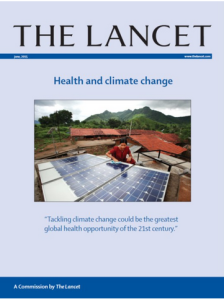
The esteemed British medical journal The Lancet has released two commission reports emphasizing the pivotal role that farms and food play in deteriorating human and environmental health, as well as in the mounting chaos of climate change.
So dire is our current state, the reports argue, that our ongoing survival and welfare as we live on earth requires a radical transformation of the farm and food systems. It will take mass public interest, activity, and direct support to make that happen.
The commissions warned explicitly that this essential transformation will require that consumers demand and pay for food that is raised and distributed in new ways. What you choose to eat, and the way your food is grown, have a direct impact on personal and global health. Our individual choices collectively create the rapidly deteriorating condition of our public health and the earth environment that sustains us. Those are not opinions or illusions, but rather scientific realities which are once again substantiated in these two commission studies.
According to The Global Syndemic report, human beings are actively under threat from three global pandemics, all of them directly linked to the way we eat. Through their operations ‘Big Ag & Food’ corporations are driving global epidemics in obesity, undernutrition, and climate change. All of them threaten human beings. But their interactions create a hazardous impact greater than the sum of one, or two, or more afflictions. In combination, the three pandemics establish a global syndemic. That’s a set of linked health problems involving two or more afflictions that interact synergistically to drive conditions into a danger zone.
The researchers noted that ‘Big Food’ companies, driven by profit and heedless economic expansion, are through their actions inciting this syndemic. Industrial farm operations drive greenhouse gas omissions; meanwhile, paradoxically, people around the world are stricken by undernutrition, obesity, and a host of other diet and environment-related diseases.
The syndemic commission found that pandemics of malnutrition and obesity interact with climate change in a feedback loop. Together they represent an existential threat to humans and the planet. The modern western diet, they wrote, has become highly damaging, and needs a complete overhaul if we are to avoid ecological catastrophe. We need to cut global meat consumption in half, and more than double the volume of whole grains, pulses, nuts, fruit and vegetables we eat, according to the commission.
In conclusion, the syndemic commission report noted that the evidence that our diets are the largest cause of climate change and biodiversity loss is now overwhelming.
Strongest Lever Meanwhile, also in the month of January, 2019, the 37 scientists of the separate EAT-Lancet Commission on Healthy Diets from Sustainable Food Systems in 2019 authored their landmark publication, Food in the Anthropocene. These scientists concluded that food is the single strongest lever to improve human health and environmental sustainability.
Food systems have potential to dramatically increase environmental sustainability, they wrote, and to nurture and to improve human health. Our current food systems, however, are fouling ecosystems, and accentuating climate change. Overall the food system is the single largest driver of environmental degradation.
Further, as the commission reported, unhealthy diets now pose a greater risk to morbidity and mortality than unsafe sex, alcohol, drug, and tobacco use combined. Thus, an immense challenge facing humanity is to provide a growing world population with healthy diets from sustainable food systems. The Food in the Antropocene commission called for a radical transformation of the global food system. Individual action won’t be enough. We need to act as individuals, and then also actively cooperate on community, national, and global approaches and systems.
Post Views:2,447
“Nebraska leads the nation in organic livestock numbers and is one of the leading producers of grass-fed beef. In time we will lead the nation in producing and marketing humanely raised livestock.” – Kevin Fulton, rancher
by Steven McFadden – July 24, 2013
Out of the smoldering rhetorical and legislative rubble of recent years, a band of farmers – the Nebraska Farmers Union – has stepped forward in a joint venture with the Humane Society of the United States (HSUS) in an effort to blaze new, cooperative market trails that lead to increased opportunities for small and mid-size farmers, as well as to more humane livestock care.
Most Americans eat meat of one kind or another (96% of us). Questions about where our meat came from, how the animals were treated when alive, and how they were killed and prepared for our tables, are fundamental. They matter a lot, and in a lot of ways. Thus this joint venture between two groups that might well stand in opposition to each other is a model of national and perhaps international significance.
Nine billion animals are raised for the table each year in the USA. The experience the animals live out on a farm or endure in mass, industrial confinement has economic, environmental, health and moral ramifications…
Reviews of Deep Agroecology: Farms, Food, and Our Future “…deep agroecology is more than the promotion of another growing system. It represent a fundamental change in the perceptions of humans about the choices they make in planting, harvesting, and eating food…The result is a hard hitting, powerful survey that takes the food system ideal a step further…” – Diane C. Donovan for Midwest Book Review, Nov. 2019
“…Because deep agroecology draws on a combination of science and ancient wisdom, it also highlights how many indigenous cultures have, for centuries, recognized the importance of strong, healthy communities, and how they’re dependent on the planet on which they live…An enlightening work of ecological thought.” ~ Kirkus Reviews, Nov. 2019
Reviews of Other Works
“Absorbing, engaging, thoughtful, thought-provoking, exceptionally well written, and thoroughly ‘reader friendly’ in organization and presentation, Tales of the Whirling Rainbow: Myths & Mysteries for Our Times is unreservedly recommended for personal reading lists, as well as community and academic library collections.” – Editor’s Choice, Midwest Book Review
“This wise and provocative collection is highly recommended.” – Library Journal on Profiles in Wisdom
“Our leaders should sit and listen to the counsel Steven McFadden has gathered…” – The Washington Times
“Profiles in Wisdom does a fine job not only of presenting the dignity, complexity, and wit of important Indian philosophers and religious leaders, but also of issuing cautions against easy uplift and wisdom injections…There are some stirring and unexpected powers unleashed in this book.” – The New York Times Book Review
“An excellent read. Informative without being preachy. Exactly what I have been looking for. Bravo!” – Smashwords Review written by W.E.L. about Native Knowings: Wisdom Keys for One and All
“It’s inspiring to read about all of the wonderful efforts Steven McFadden details…” – Teresa Opheim, Practical Farmers of Iowa, about The Call of the Land.
“The Call of the Land will inspire you with page after page of innovative projects across the country that are having a positive impact on how we eat.” – INGRID KIRST, Community CROPS Executive Director, Lincoln, Nebraska
“McFadden’s call to action is clearly written and well referenced with a robust list of current websites and a bibliography for general reading on positive methods for resolving our food security challenge.” — Charles Francis, Director, Center for Sustainable Agricultural Systems, University of Nebraska-Lincoln, reviewing The Call of the Land.
“…Readers new to this movement sometimes struggle to identify a primer that is accessible and grounded in real-world examples. The Call of the Land lends itself as a tool for such readers, as it not only illustrates a foundational agrarian ethos historically argued by Wendell Berry and Wes Jackson, but it also outlines a variety of practical models and approaches to inform the practice of local food system development. — KIM L. NIEWOLNY and NANCY K. FRANZ, Journal of Agriculture, Food Systems, and Community Development
“The Call of the Land workshop at Stonewall Farm was a great opportunity to forward our goals of producing a local, sustainable food system in our region.” – Michael Faber, General Manager of Monadnock Food Co-op
“The Call of the Land workshop (presented by Steven McFadden) was a great benefit to helping us achieve our mission at the Conservation District…The event created a forum for us to meet new individuals who want to work on improving the local food system and re-engage with stakeholders who we have worked with in the past. ” – Amanda Costello, Cheshire County Conservation District, Walpole NH
* * * * * * * *
Critique Magazine: “To the uninitiated, reading Steven McFadden’s Legend of the Rainbow Warriors is a bit like hearing one’s native language spoken with an entirely new accent. The words are familiar, and the ideas and events of which he writes are certainly not news. But the light Mr. McFadden uses to illuminate his subject is alien. Self-sacrifice and stewardship of the land do not mix well with the American traditions of further, faster, and damn the consequences. Indeed, the juxtaposition of American-style progress and Native American sensibilities is one of history’s oddest coincidences…”
* * * * * * * *
Post Views:0
Over the years I’ve had the privilege of working with groups both large and small from coast to coast, and abroad. I’ve spoken at conferences, workshops, and seminars, as well as in banks, insurance companies, hospitals, forests, farm fields, fire houses, bookstores, churches, libraries, and colleges.
My gift is to offer audiences inspiration and empowerment by speaking about visions and practical ways to realize them, grounded in expertise and experience.
Wise elders say that we have only this generation
to come into a harmonious, inter-connected way of living,
or our human family will be extinct!
I invite you join me and
my colleague Brooke Medicine Eagle
for an amazing, complementary gathering of wisdom keepers
beginning November 16th:
RETURNING TO EARTH ~ BECOMING FULLY HUMAN
Moving Through Current Challenges into
Thriving, Sustainable, Respectful Life
focusing on empowering you with
real, workable, sustainable solutions
for our current personal and global challenges.
To register for this free summit, please follow this link.
Sample Talks and Workshops offered by Steven McFadden
The Call of the Land: Deep Agroecology ~
Our relationships with the earth, with our local environments, and with our food are being actively challenged. Agroecology and deep agroecology are intelligent, sophisticated, and effective ways to meet and to transcend those challenges, establishing a clean, healthy foundation on the earth for our food and for the next evolutionary step of humanity. We can respond wisely and decisively to the chaos in our climate and culture, for the present and for future. My talk on The Call of the Land offers facts, experiences, ideas, and ideals leading to the well-being and upliftment characteristic of deep agroecology.
Tales of the Whirling Rainbow ~
Gather round to hear true, dynamic tellings of some of the key multicultural, multifaith myths and mysteries of the Americas, and to consider how those legends may resound helpfully in real time. They are stories worth knowing.
The ominous reality of hate-mongering and cultural division are symptoms of a deeper crisis of meaning and purpose. Because these stories arise from the deepest roots of the Americas, the Tales of the Whirling Rainbow can be of high service as we pass through the present cultural and environmental tempest.
Odyssey of the 8th Fire ~
It is my honor to be able to sound a drum, to offer flowers, to take a place in a circle, and to relate the true, epic saga of a multicultural band of pilgrims who made a prophetic journey walking from the Atlantic to the Pacific under the dramatic sky sign of the Whirling Rainbow, and the sure guidance of traditional keepers and spiritual elders of North America. Through this saga, and interactive telling, we may engage the elders’ great and generous giveaway of understandings about our land, and our lives together upon the land.
Celebrate Santa Fe’s Community Farms
– Meet Your Ambassadors to the Earth –
If you love clean, fresh, local food, then you will want to head to the Farmer’s Market on April 17, 2018 to Celebrate Santa Fe’s Community Farms, an early evening educational get together. The public is cordially invited to join with some of Santa Fe’s pioneering community farmers and authors to sample, delicious, healthy local foods, and to explore visions of how Santa Fe can become more food secure and food healthy.
The first annual Celebrate Santa Fe’s Community Farms event is set for Tuesday evening, April 17, from 5:30-7 PM at the Farmers Market on Paseo de Peralta. Donations to help defray costs are welcome.
Learn about what’s happening with local community farms, and engage with dynamic agrarian visions of what is possible for the Santa Fe community.
Sponsored by Beneficial Farms CSA, the early evening celebration will feature samples of local food, and several short presentations from local farmers and authors, including Thomas Swendson of Beneficial Farms, Mark Nelson of Synergia Farm, Steven McFadden (author of Farms of Tomorrow, and The Call of the Land), and also (other speakers ? This list is all male. We should invite a woman to speak. Who?). Tejinder Ciano of Reunity Resources will fill us in on the destiny of the historic Santa Fe Community Farm at San Ysidro Crossing.
You are cordially invited to join with your Santa Fe neighbors to Celebrate our community farms, and to explore the possibilities for supporting our local farms, increasing our local food security and food health, and helping to strengthen community.
Reiki Training – I’ve been practicing and teaching the art and discipline of Reiki hands-on complementary healing for almost 40 years. I offer Reiki training classes in Santa Fe, New Mexico.
Odyssey of the 8th Fire – June, 2015 marked the 20th anniversary of the first steps along the Odyssey of the 8th Fire. To celebrate it, journalist Steven McFadden will sound the drum, tell the tale, and show an 8th Fire film relating the fundamental wisdom teachings of North America.
This one-time evening event – Odyssey of the 8th Fire – is set for Thursday evening, June 25, 2015 , 7-9:30 PM at the Unitarian Church of Lincoln, 6300 A St. Lincoln, Nebraska. The Odyssey is free, although the storyteller will “throw a blanket” to cover costs.
Storyteller McFadden will relate the true tale of a great prophetic pilgrimage from the Atlantic to the Pacific which began precisely 20 years ago — a pilgrimage which remains suspended in mystery. The journey began in the east at the Atlantic sea, then the pilgrims walked for eight months across the Heartland, fading at the Pacific’s Western Gateway.
In the unfolding of this true tale, learned elders of all nations make a great and generous giveaway of the teachings they carry for human beings.
If you’d like to sit in the circle and hear the story, you can join the Facebook events page for Odyssey of the 8th Fire.