Gallery I. Gallery II. Gallery III. Gallery IV. Gallery V. Gallery VI. Gallery VII. Gallery VIII. Gallery IX. Gallery X. Gallery XI.
May you scroll in beauty – Steven McFadden


As the pace of world transition intensifies, I’m moved to once again articulate in direct language my understanding of the vision held by millions of people around the world: the vision of agroecology.
Thus, I offer below a two-minute slide show with words and images characterizing some basic elements of the agroecological vision, and also offering a glimpse at how deep agroecology embraces the vision, then endeavors to explore further into positive possibilities.
Note: The slides are set at 7-second intervals. You can start and stop the presentation by using the slide at the bottom.
 Thanks to the enterprise and good graces of the New Mexico Book Association (NMBA), I’ve been invited to a reception Celebrating New Mexico Writers at the convention center in our stucco-studded capital city.
The New Mexico Writers’ Reception is an opening event for the Santa Fe International Literary Festival.
 My book Deep Agroecology: Farms, Food, and Our Future is what secured the invitation—an invitation I was honored to receive, and pleased to accept. The reception will perhaps afford opportunities for wider understanding of agroecology and what I regard as its essential role in our raucous era of transition.
Over the last several years my attention has been focused on completing the biography of the late Navajo leader, Leon Secatero (1943-2008). I’ve not given a lot of thought or energy to agroecology or deep agroecology. Yet I still regard them as the Main Chances for positive action in our unavoidable reckoning with climate crisis, food security, earth care, and worker justice.
For the sake of digital experimentation I asked an online Artificial Intelligence (AI) program to declare what it might about “deep agroecology.” Here’s a calculated response from ChatGPT:
“Deep agroecology is a term used to describe an ecological approach to agriculture that encompasses the social, cultural, and spiritual aspects of farming as well as the economic and environmental dimensions. It recognizes the interdependence of all living things and emphasizes the importance of maintaining healthy ecosystems, biodiversity, and cultural diversity.
“It is a holistic approach to agriculture that recognizes the interconnectedness of social, cultural, ecological, and economic systems and strives to create a more just and equitable food system for all.”
There you have it, the computer brain at work. Fair enough for a start, I suppose. But it’s not enough to cause me to abandon my vocation and stop doing my own writing on this or any other subject.
 One fundamental understanding of agroecology in general and deep agroecology in particular is that being directly in touch with the earth promotes good physical, mental, and spiritual health for people, animals, plants, and the whole. There’s nothing artificial about that earth-based quality of intelligence, qualities naturally intrinsic to full health.
Traditional peoples long ago recognized that in times of great personal, family, or community trauma, human beings could find emotional and psychic stability by going to the land, by deliberately touching or lying upon it, relaxing, breathing, and releasing the trauma to the embrace of Mother Earth. That creates a simple, cost-free opportunity to be filled with grounded peace, even if just for a moment. This is one of the many gifts of our home planet. In reciprocity we have the opportunity to complete a circle by offering our gratitude.
As earth changes intensify, we will always have opportunity to anchor ourselves in strength and wisdom, and then to take positive steps forward. That’s true, now even in the context of the authoritative final warning so recently delivered to the world. Positive action is still possible, still the key.


My wife Elizabeth treated me to a movie for my birthday just before 2022 came to a close: three hours of the new Avatar film in 3-D at an I-Max theater. Great beauty we beheld in The Way of Water. Although I have to say that as is true for me with most modern adventure films I find the endless battles to be tedious at best, deranging at worst.
More emphasis on story in 2023, I say to Hollywood, and less focus on ways to maim or terminate ourselves and other entities.
In that regard, I’m interested to share a link to a two-minute video clip on water and the IMAGES we hold and project into the world. May we all find ways to do this with greater skill and beauty in the new year and beyond. Peace, S.

 The phrase main chance generally refers to the most advantageous prospect available, the opportunity for the greatest progress or gain in any given set of circumstances. I use the phrase now in regard to our tempestuous environmental, climatological, social, and spiritual circumstances.
In a historical context, playwright William Shakespeare employed the phrase main chance memorably in a speech by the Earl of Warwick in Henry VI, Part 2:
“There is a history in all men’s lives,
figuring the nature of the times deceased,
the which observed,
a man may prophesy, with a near aim,
of the main chance
of things as yet not come to life…”
With my nearest aim, I now prophesy for the future that our main chance would be wisely grasped in reference to collective ambitions that we must of necessity awaken in ourselves: ambitions for survival and well-being through climate chaos and more, for a clean Earth, for health, for respect, for purpose, for the next seven generations, for beauty, for spiritual maturity.
All of this is what farms are for, what they can be for if we set our minds and hearts to make it so. Farms and food are the key to our physical, moral, community, and spiritual survival and evolution. Our main chance to realize all of this lies in the realms of agroecology and deep agroecology.
For your consideration, here’s a sample of five memes I was inspired to create by the main chance theme:


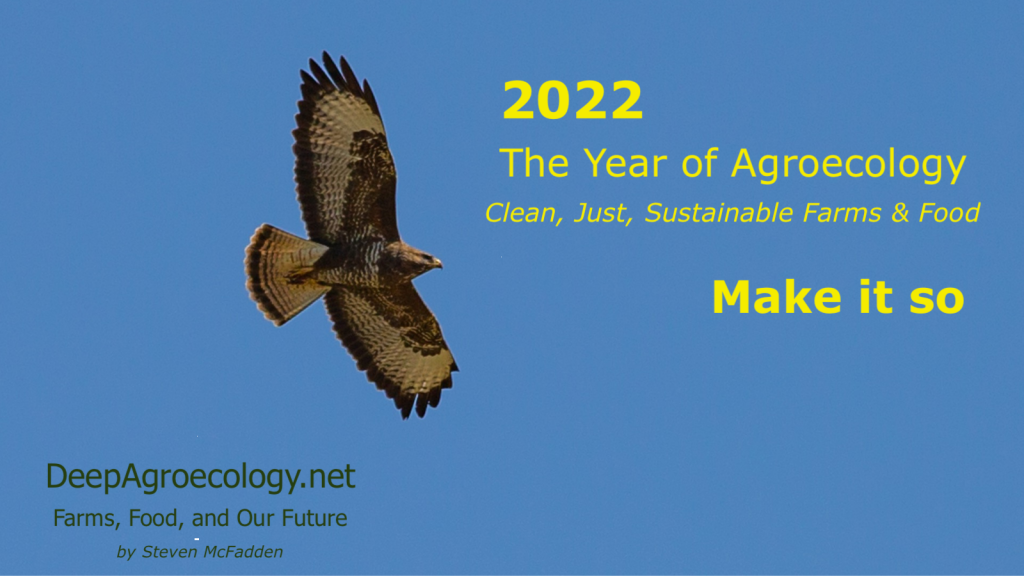
By the authority vested in me (and everyone else) by virtue of being someone with something important to say, I hereby declare 2022 to be The Year of Agroecology. Someone needed to do it. It’s time.
I hope the other 7.8 billion human beings on the earth are listening—not to me necessarily, but rather to the swelling chorus of farmers and food workers around the world who are leading the way forward, building a foundation for a clean, healthy, just, and sustainable future. That’s the essence of agroecology. That’s the opportunity before us. And that opportunity addresses a range of critical issues from climate chaos and social unrest to food quality and food security.
Although the word agroecology may sound abstract, it’s a term that’s both plain and exalted. It’s about the food we all eat, the human beings and animals who are part of that web of relationship, the essential care of the earth we all depend upon for our lives, and the utter necessity of our spiritual growth to the point where we human beings efficiently and gracefully engage our responsibility as caretakers of the earth.
We all have an opportunity to help advance the vision of agroecology, and thereby to participate in setting right the ways we human beings are in relationship with farms, food, and the future. This is the vision described in my book, Deep Agroecology: Farms, Food, and Our Future. Agroecology is a vision now held and practiced by millions of human beings around the world. The year 2022 (and the years beyond) hold the potential and the necessity of agroecology becoming a vision held and supported by billions. That’s what it will take. That’s what we need. 2022 can be, and with wisdom will be, The Year of Agroecology.


by Steven McFadden
My primary work throughout the rest of 2021 is dedicated to researching and writing the biography of a man who was a kind, knowledgeable, and skillful leader for the Navajo people, as well as for people around the world. Having died in 2008, he left a legacy of insight into the well being of our earth, and indications for time-tested ways of supporting hózhó – life in balance and beauty.
While at first a biography might appear to be a divergence from the topics of agroecology and deep agroecology, it’s actually related. Part of the biography, through the subject’s eyes, is an exploration of how we might reckon wisely with the catastrophes described in Code Red for Humanity, the alarming new UN report. In my view it’s the most critical report in history. The dire realities it spells out demand our global attention.
While I’m at work on the biography, I’ll continue to let people know about my book, Deep Agroecology, and to create occasional memes to call attention to the critical issues in the book, and the high, necessary vision it sets out.
Here’s a sample of the kinds of memes that I create from time to time, as the spirit moves me.


Colossal forces—social, financial, technical, environmental, governmental, and climatological—are whirling emphatically this year, directly engaging, disengaging, and impacting our farms and food. Each human being on Earth has a stake in how it all settles out. It’s that basic.
Among the forces: climate extremes, environmental breakdowns, food security threats, the Covid-19 pandemic, all accompanied by a burgeoning corporate involvement in the realm, including big finance and the advance guard of data-driven AI technologies.
Those forces are met with the soul-yearnings of millions of human beings of all colors, faiths, and nations. They hunger and thirst for a planet-wide realization, a spiritual awakening that results in a sincere, whole-hearted, justice-based reckoning with the critical, foundational matters of our farms and food.
This is no time for co-opted or fake measures, no junk agroecology. Things are real.
The consequential vectors—big money, big tech, big GMO, big chemical, the human beings, and the poisoned politics of our times—are engaged for a defining moment, a moment likely reaching a crescendo in September, in New York, at the UN Food Systems Summit 2021 #UNFSS.
A classic yang-yin polarity thus emerges in sharp relief as we move through critical points on the pathway to the future not just of farms and food, but also of all that rests upon the foundation that farms and food constitute. Mechanical, material, technical efficiency and profit reside in a yang zone, while the yin realm is home to the basic, upwelling needs of every human being for dignity, respect, justice, adequate clean food, a beautiful, sustainable world to live in, and a dynamic active vision that includes the full circle of life…
The rest of this blog post is at Mother Earth News…

My wife Elizabeth and I are on our way out of Nebraska, work having summoned us once again to the southwest. In parting from this stalwart state, I want to share a vision.
The Lincoln Journal-Star, the paper of record for the state’s capital city, recently published an article about the intention of some local developers to establish an “iconic” building in Lincoln’s Haymarket district. That article prompted me to recall an iconic vision I had nearly a decade ago when I first moved to this Cornhusker State.
 At that time my office window had a direct view of the Nebraska State Capitol, a 400-foot tall building graced at the top with an iconic image of The Sower—a universal and greathearted figure hard at work, purposefully sowing seeds across the land that we might have the food and fiber that sustains us all.
The Sower is an indisputably handsome and worthy icon for an agrarian state. I was always inspired looking out my window and up at his powerful figure. But then I began to think: Nebraska is The Cornhusker State, not The Cornsower State.  Where was a statue depicting The Huskers: the people who husked, or harvested, the crops rising from the seeds?
With memory of that vision activated, I wrote a “comment”—basically a digital letter to the editor—and posted my comment at the end of the Journal Star story. This is an updated version of my comment:
“Here’s my idea for an icon they can put on the roof of the proposed Haymarket building: a monumental statue of The Huskers. By that I mean a 20-25 foot high sculpture in the style of The Sower, using similar materials.
“Sculpt The Huskers as a man, woman, daughter, and son working their way (husking) through a field of sculptural corn 20′ or more high. Build the monument so that the four figures are universal human beings (as The Sower appears to be) bringing in the goodness of what The Sower has sown. Build the monument so that it’s facing The Sower, and is a pubic attraction with its own access and egress, so as not to disturb the businesses in the building.
 “A monument like that would bring honest pride, dignity, and joy for all Nebraskans (and visitors) as they might walk among the sculptured people and their giant sculptural corn field. The two monuments (Sower and Huskers) would tell children and adults in a glance the story of the plains and the grains and the people. Such an epic sculpture of The Huskers would express the heart of the state, and thus would be ICONIC indeed.
“I’ve always felt that such a monument would be fitting for the north end of Lincoln’s Centennial Mall, but the Haymarket would also be fitting in many ways.
“The Cornhuskers” monument could complete what might be thought of as a sculptural yin and yang, bringing a visual and energetic dynamic into perpetual play. The moral lesson would be both implicit and explicit: you reap what you sow.”
A monument for The Huskers in combination with The Sower would distinguish Nebraska in a way the Gateway Arch marks St. Louis, the Statue of Liberty accents New York, and the Golden Gate Bridge signifies San Francisco.


As yet another United Nations Code Red warning flashes around the world, I join with those who propose that ginawaydaganuc is an essential and realistic mind set, and who encourage general, wholehearted embrace of all that it denotes and connotes.
What in our vast, entangled cosmos is this thing called ginawaydaganuc? Suffice for the moment to say that it’s a word from one of the original languages of North America, Omàmiwininìmowin(Algonquin). That language has been extant on North America for many thousands of years – a vital vernacular.
This Algonquin word is easier to say than you might at first imagine. It’s pronounced with a soft ‘g’: gee-na-way-dag-a-nook. Try speaking the word aloud phonetically, and experience how the sound feels in your head, heart, and soul. Ginawaydaganuc denotes the fundamental reality that we are all related–with each other, with the natural world, with the cosmos.
There’s more to say. But before contemplating the ramifications of ginawaydaganuc, take a moment to breathe, and to absorb the full impact of one of the latest Code Red warnings. This one comes from the UN’s 2020 report, The Next Frontier: Human Development and the Anthropocene.
“We are at an unprecedented moment in the history of humankind and in the history of our planet,” the report says. Under relentless pressure from climate chaos, species loss, inequality, natural destruction, and COVID-19, our planetary and social warning lights are “flashing red”…
My complete blog post is live now at .
 Your actual, real-time Odyssey parallels this Summer’s ‘blockbuster’ film
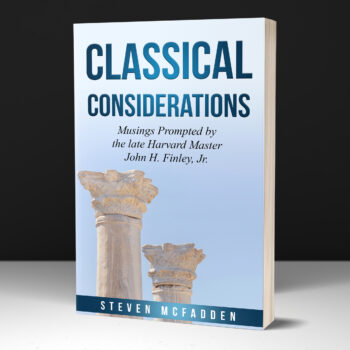 New and improved: Classical Considerations
 Behold the Light: Farms, Photons, Futures
 Our Collective Odyssey: Song and Story for the Generations Arising