Community Supported Agriculture (CSA) is an agrarian movement that arose in America starting in the 1980s. In an era of general farm consolidation and industrialization, CSA has continued to develop. By now there are many thousands of farms and many hundreds of thousands of households networked directly with local farms.
The initial vision of CSA arose in the context of wide recognition of the necessity for renewal of agriculture through its healthy linkage with the human community that depends on farming for survival. The vision united farmers and consumers in an agrarian relationship for the health of people and planet, and explicitly recognized the necessary stewardship of soil, plants, and animals: the essential capital of human cultures. CSA emerged as a web of relationships.
Recently I had an opportunity to engage in conversation about the movement and its future with two renowned CSA farmers: Jean-Paul Courtens of Roxbury Farm in New York, and Allan Balliett of Fresh and Local CSA in Shepherdstown, West Virginia.
My thanks to Allan for creating and hosting BDnow Podcast 017 (The Future of CSA), and to Jean Paul for sharing his experience and insight.
As it happens, I must demur on the matter of “foremost…philosopher,” which is a descriptor applied to me in the podcast. CSA farms arose as a community supported concept. “The idea of CSA was in the air in the late 1980s.” Many different people were contributing to the thoughts and practices, including Jan Vander Tuin, John Root, Jr., Andrew Lorand, Robyn Van En, Elizabeth Henderson, Anthony Graham, Lincoln Geiger, and Alice Groh. Trauger Groh – my coauthor on Farms of Tomorrow and Farms of Tomorrow Revisited – had a profound and eloquent grasp of farming and of the budding CSA vision. My role with CSA in those days, and ongoingly, has been not to philosophize, but rather to listen closely and then to write about what I learn.

#csa #organicfarmers #organic #agrarian
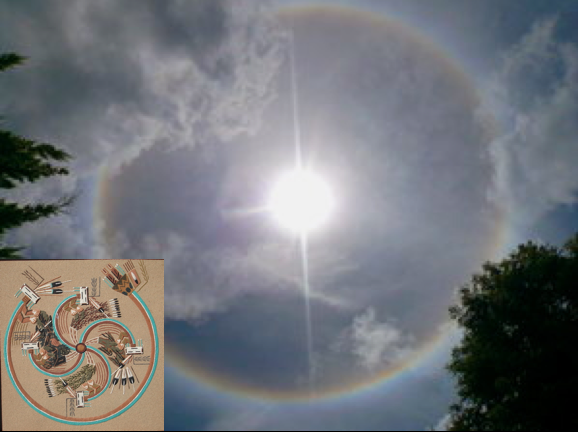
 For most of us, for much of the world, the heart of Winter Festival lies obscured behind the veil of outer celebration. Yet the veil is translucent. Through it, with a willful gaze, we may behold the mystery of the low-hanging Sun as it seems to stop, heralding the onset of the north wind and the clear, hard bite of winter. Through the veil we also may sense something else just beyond our grasp – something vast, poignant, resonant.






 Right now a small band of women from the Ojibwe native nation is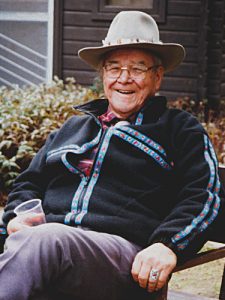
 The wind spiked out over Cape Cod Bay, frothing the blackened waters into angry, spitting caps. A great, bitter wind was upon the land and the sea. Still, the people came. In the face of icy needles cast by the unrelenting gale, 40 people broke from their cars into a wild, scattered search for a place with a scrap of windbreak. They needed protection, for they had arrived to light a sacred fire at First Encounter Beach, just five years before the Millennium.

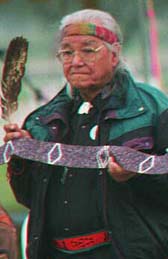
 A belt of beads is the traditional Algonquin device employed to record the solemn and binding agreement they entered into in 1793 with the US and Great Britain. This was a time when the newly formed government of the United States was defining its corporate existence upon Turtle Island and the Canadian nation did not yet exist. Native nations were full and equal partners to the treaty, with the same standing as the United States and Great Britain. But the Algonquins did not use black marks upon paper to keep important records; they used beads woven into beautiful, long-lasting belts.

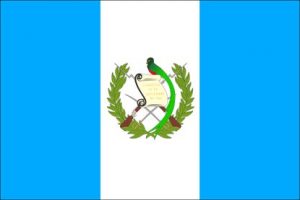 When the war finally wound down in the 1990s, the United Nations Truth Commission conducted an 18-month investigation.* The UN found massive violations of human rights by the government of Guatemala with the complicity of the US government. The UN report stated that acts of “aggressive, racist and extremely cruel” violence descended to the level of genocide directed against the country’s indigenous Mayan population.
 Carlos Barrios says he was born into a Spanish family on El Altiplano, the highlands of Guatemala. His home was in Huehuetenango, also the dwelling place of the Maya Mam tribe. With other Maya and other indigenous tradition keepers, the Mam carry part of the old ways on Turtle Island (North America). They are keepers of time, authorities on remarkable calendars that are ancient, elegant and relevant.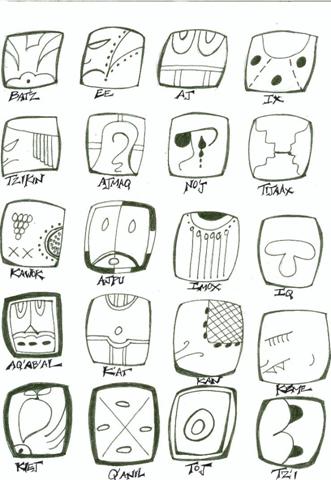
 From his understanding of the Mayan tradition and the calendars, Mr. Barrios offered a picture of where we are at and what may lie on the road ahead:
 As he met with audiences in Santa Fe, Mr. Barrios told a story about the most recent Mayan New Year ceremonies in Guatemala. He said that one respected Mam elder, who lives all year in a solitary mountain cave, journeyed to Chichicastenango to speak with the people at the ceremony.