This month a small band of women from the Ojibwe native nation is walking the land in prayer from the source of the Mississippi River at Lake Itasca in the north, more than 1,200 miles in a south direction along the shore to the point where the great river spills into the sea at the Gulf of Mexico.

Pilgrim paths form a cross.
The Mississippi River Water Walkers sang the Water Song when they began their walk on March 1, 2013. By now they are many hundreds of miles further south, still in ceremony, still walking on to fulfill their vision.
When the Mississippi Water Walkers reach Memphis, Tennessee in a week or so, their north-to-south trail will intersect with the east-to-west trail of the Sunbow Prayer Walk, which was guided 2,500 miles across the land 20 years ago by Grandfather William Commanda, now in spirit.
The trails of these two pilgrim bands will intersect in space and across time, forming a Four Directions wheel anchored in prayer and ceremony on the land at the Memphis shore of the Mississippi.
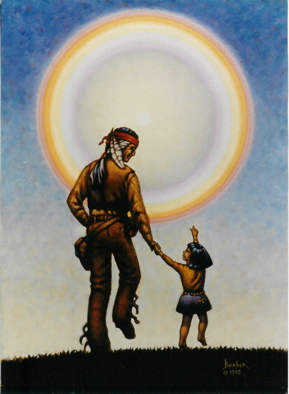
The eight-month long, male-driven Sunbow Walk from the Atlantic to the Pacific crossed the Mississippi River from Tennessee to Arkansas on the ninety-eighth day of the journey (Sept. 28, 1995). They traveled then under the teachings of the Seventh Fire and the skysign of the Whirling Rainbow
The women who are the Mississippi River Walkers, now on foot in real time 2013, are approaching intersection with the Sunbow trail in Memphis.
You can friend the River Walkers and support them on their Facebook page, a page which is growing as the walkers make their way to the south, stopping at key points along the way to offer ceremonial blessings.
“We want the walk to be a prayer,” says Sharon Day, walk organizer, on their Facebook page. “Every step we take we will be praying for and thinking of the water. The water has given us life and now, we will support the water.”
 Right now a small band of women from the Ojibwe native nation is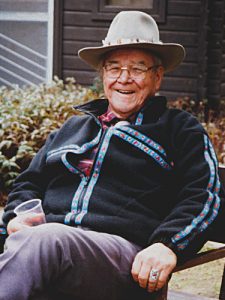
 The wind spiked out over Cape Cod Bay, frothing the blackened waters into angry, spitting caps. A great, bitter wind was upon the land and the sea. Still, the people came. In the face of icy needles cast by the unrelenting gale, 40 people broke from their cars into a wild, scattered search for a place with a scrap of windbreak. They needed protection, for they had arrived to light a sacred fire at First Encounter Beach, just five years before the Millennium.

 A belt of beads is the traditional Algonquin device employed to record the solemn and binding agreement they entered into in 1793 with the US and Great Britain. This was a time when the newly formed government of the United States was defining its corporate existence upon Turtle Island and the Canadian nation did not yet exist. Native nations were full and equal partners to the treaty, with the same standing as the United States and Great Britain. But the Algonquins did not use black marks upon paper to keep important records; they used beads woven into beautiful, long-lasting belts.

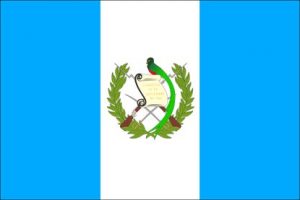 When the war finally wound down in the 1990s, the United Nations Truth Commission conducted an 18-month investigation.* The UN found massive violations of human rights by the government of Guatemala with the complicity of the US government. The UN report stated that acts of “aggressive, racist and extremely cruel” violence descended to the level of genocide directed against the country’s indigenous Mayan population.
 Carlos Barrios says he was born into a Spanish family on El Altiplano, the highlands of Guatemala. His home was in Huehuetenango, also the dwelling place of the Maya Mam tribe. With other Maya and other indigenous tradition keepers, the Mam carry part of the old ways on Turtle Island (North America). They are keepers of time, authorities on remarkable calendars that are ancient, elegant and relevant.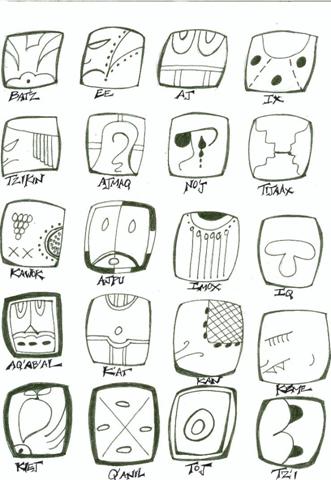
 From his understanding of the Mayan tradition and the calendars, Mr. Barrios offered a picture of where we are at and what may lie on the road ahead:
 As he met with audiences in Santa Fe, Mr. Barrios told a story about the most recent Mayan New Year ceremonies in Guatemala. He said that one respected Mam elder, who lives all year in a solitary mountain cave, journeyed to Chichicastenango to speak with the people at the ceremony.

 When our Star appears in the East (about 4:00 AM), the mounds for 12 staffs will be marked and put in a circle with an opening to the East. All nations represented with a staff will circle around the center fire for the entrance of the sacred pipes, to be placed in the Four Directions with prayer and song.
 Honoring the Sacred Path for the Five Finger Ones will be done with a Mountain Song, ending with the Blessing Way. The prayer sticks will be taken to the mountain spirits for their guidance and wisdom, as our journey begins here.



 Snyder revealed himself as one the many elders we had set out to find on
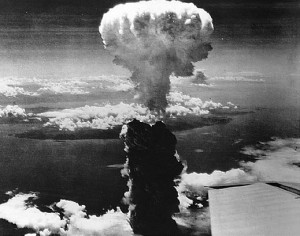 The fire that was ignited 57 years ago on August 6, 1945 when the Enola Gay dropped the first atomic bomb on Hiroshima, Japan, was ceremonially extinguished by a band of pilgrims May 27, 2002 at Big Mountain on Black Mesa in Arizona, in a high desert range sweet with the smell of sagebrush.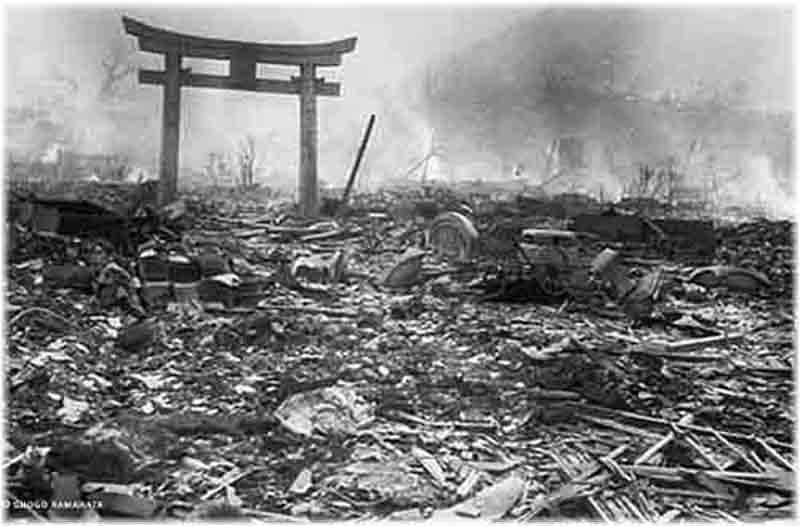


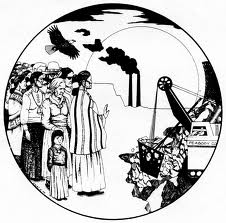 The assault on the material resources of Black Mesa continues. Peabody Coal Co. is planning on expanding operations by opening a new mine, which will ultimately infringe upon Big Mountain itself.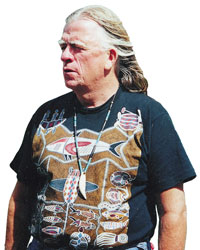
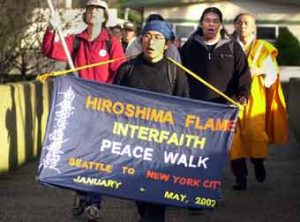 The Hiroshima Flame Interfaith Pilgrimage had its origins in the year 2000 under the inspiration of Tom Dostou while he was in Japan. At that time he was entrusted with a spark of the Hiroshima Flame (the source flame remains burning in Japan). Tom conceived the vision of returning the flame to where it had come from — not as a protest, but as a necessary deed of spiritual redemption, because not only the people of Hiroshima had died, but also many native peoples were poisoned by the uranium dug up, without spiritual permission, on their lands.

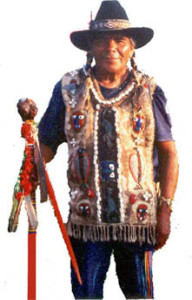 An elder of the Yaqui Indian Nation, and a Nahual (man of power), Cachora has remained a mystery figure for decades. But now he is coming forward from his homeland in the Sonoran Desert of Mexico into the public realm. It is time for this, he says. Chachora says says he is the real man who is portrayed as the enigmatic shaman don Juan in the series of books by Carlos Castaneda: Journey to Ixtlan; The Teachings of Don Juan; and so forth.