“What they greatly thought, they nobly dared.” – Homer, the Odyssey
 Right now a small band of women from the Ojibwe native nation is walking in prayer from the source of the Mississippi river at Lake Itasca in the North, to the point where the great river spills into the sea at the Gulf of Mexico.
They sang the Water Song as they began on March 1, and they are by now well into Iowa and walking on.
If you would like to follow the Mississippi River Walkers, you can friend them on their Facebook page, a page which is growing as the walkers make their way to the south, stopping at key points along the way to offer ceremonial blessings.
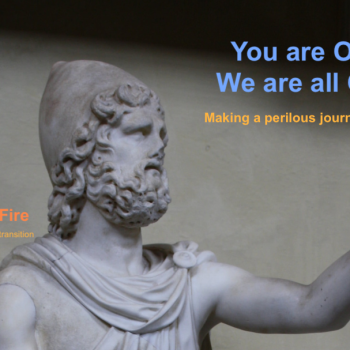
As I read about the powerful spiritual deed of these sisters, I was reminded of the 8-month long epic walk from sea to sea in 1996-96 guided by the late Algonquin teacher, Grandfather William Commanda – the Sunbow Walk many know as the Odyssey of the 8th Fire.

 “A lot of the spiritual work people do is just putting whipped cream on top of a bowl of garbage. You’ve got to clean up the garbage first before you add the whipped cream.
 “What happens when you grow old and no longer wish to compete with younger people? Who do you look toward for models? Someone who is old, or someone who is an elder? And what is the difference? How do you become a sage? It’s not necessarily the result of book learning.
 So the story is: a person comes to the wise man and says, ‘how do you get wisdom.’ He says, ‘wisdom comes from good judgment.’ And how do you have good judgment? So the wise one says, ‘from experience.’ And where do you get experience? ‘From bad judgment.’
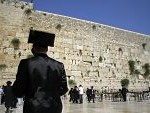 “Rabitizikel is a teenager, and the father is the venerable head of a Hassidic group. Suddenly there appears before them a person who says, ‘Rabbi, I need some help, I’m about to get married and I need some money badly.’ The Rabbi looks at him and says, ‘don’t you know you’re dead, you’ve died already.’ The man says, ‘what are you talking about? They are waiting for me. I need the money, please help me.’ The Rabbi lifts up the man’s coat and shows him that underneath his coat he has shrouds, the shrouds with which he was buried. Suddenly, it dawns on the man what has really happened and he disappears.
 “There was a pearl beyond any price and he had to go find that pearl. The pearl was in Egypt. It was guarded by a dragon, a very fierce dragon. The king called his son and told him that he must do this, and don’t you want to some day assume the role of being a person of majesty? The son said ‘yes, I want to do it.’ The whole dream, the whole notion excited him a great deal — yes, he wants to do the heroic thing.
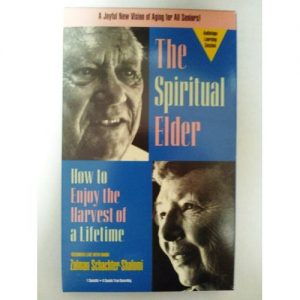
 “I start looking ahead,” Zaida Zalman says, “and suddenly I find I am looking through the rearview mirror. When you ask, ‘what would the future look like,’ I then go into a nostalgic past, a romanticized past, and then go into a tribal thing, and think for a moment, it would look like that. But it’s not going to look like that.






 “Smuggling of tobacco and narcotics, and gambling — whatever commands a profit — has created a narco-culture at Akwesasne,” he said. “Our good, traditional Iroquois values of humility, compassion, simplicity, generosity and communal service have been replaced by greed, intimidation, violence, and death.”


 I spoke with Mr. Braveheart by phone a couple of days before his visit. He told me that while he is in New Mexico he will guide teaching circles through an in-depth exploration of ceremony and ritual. He said that in this context the foundational focus of the weekend will be the honoring of feminine balance.