A placeholder page; no need to put content here.
Gaze Lifts to Classical Considerations
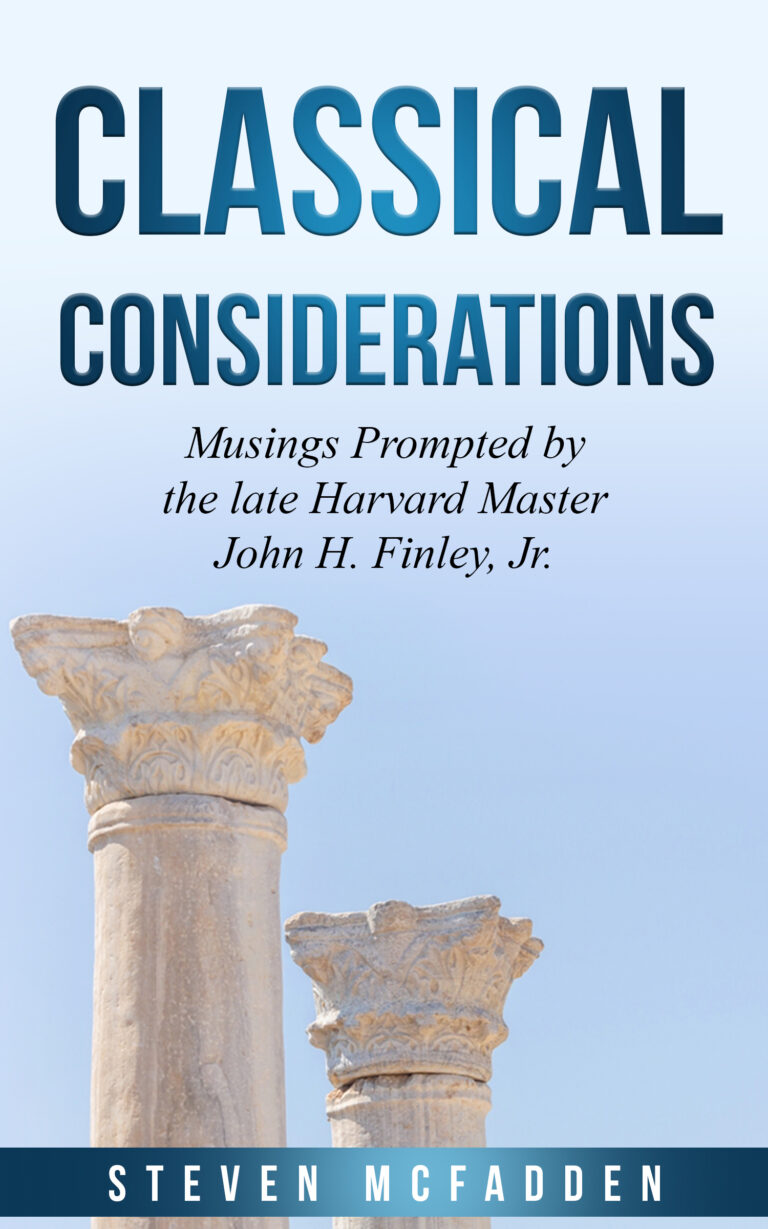
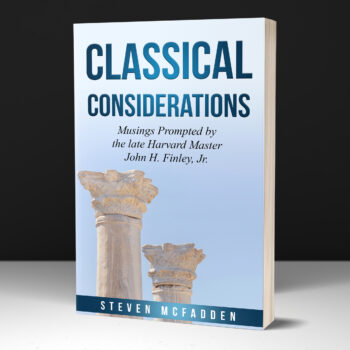
 With respect, I’m pleased to announce the publication of my new, nonfiction eBook: Classical Considerations.
Succinct but penetrating, the new eBook brings some of life’s foundational questions to the fore by telling a nonfiction story about the late John H. Finley, Jr. For 51 years Finley was the celebrated and erudite Eliot Professor of the Classics at Harvard. For generations of top students, he was a mentor and way shower.
Luminous and compellingly relevant, Finley’s story leads readers directly into engagement with the fundamental wisdom questions of a worthwhile life. While the book does not directly relate to agrarian matters, it does take a deeply rooted stance in tradition to explore the ethereal. In that sense it’s not so much The Call of the Land, as it is The Call of the Soul.
A compact 44 pages suited to all digital realms, Classical Considerations offers a thoughtfully lyrical shower of intellectual sparks to kindle a gleaming soul fire.
The eBook is available now at Amazon.com, Barnes&Noble.com, and in 9 different ebook and smartphone formats at Smashwords.com. There is a version adapted to iPhones and iPads at Smashwords, and the book will soon be available through the Apple store and other online venues.
Profiles in Wisdom: Native Elders Speak About the Earth
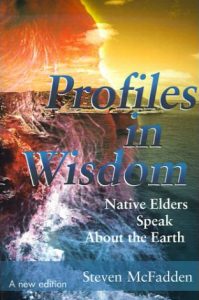
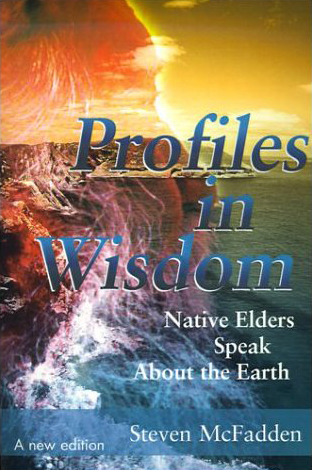
Profiles in Wisdom: Native Elders Speak about the Earth
Taking inspiration from John F. Kennedy’s Pulitzer Prize winning Profiles in Courage, Steven McFadden presents the stories and thinking of 17 Native American spiritual elders in this widely acclaimed book.
As our existing culture shifts, what to the ancient ones who have been trained in the sacred Traditions of Turtle Island (North America) have to say to us? With this question and others, journalist McFadden begins his quest to speak with contemporary Native American elders. The elders offer penetrating and poetic insight on a host of crucial matters.
This bestselling book has recently been updated, to tell the stories and share the observations of the elders 10 years after the original date of publication.
Here’s a brief excerpt from Profiles in Wisdom:
In 1983, after three days and nights of praying and fasting on a mountaintop, I snapped a twig with my fingers and had a revelation. I saw that my simple action had changed the world, and that it would never be the same again. I could never put that twig back together the way it had been. This was a small change, but an important change nonetheless.
As the sound of the snap reverberated within my mind, I understood how everything I said and did changed the world. What came with the snapping twig was not an abstract idea or a philosophical insight, but a living experience of how all my actions influence creation. Since then, the lesson of this experience has guided my life in a world where, until recently, it seemed as if most people were oblivious to the way their lives inflict deep wounds upon the Earth, the air, and the water…
Praise for Profiles in Wisdom:
“Profiles in Wisdom does a fine job not only of presenting the dignity, complexity, and wit of important Indian philosophers and religious leaders, but also of issuing cautions agains easy uplift and wisdom injections…There are some stirring and unexpected powers unleashed in this book.” – New York Times Book Review
“This wise and provocative collection is highly recommended.” – Library Journal
“Our leaders should sit and listen to the counsel Steven McFadden has gathered in this book.” – John Elvin, The Washington Times

Legend of the Rainbow Warriors
Legend of the Rainbow Warriors
is dedicated to
Woman with Many Fires
Carolyn Clay Mercer McFadden, Ph.D. (1941-1999)
Legend of the Rainbow Warriors is a journalist’s account of one of the core myths of the Americas, and an electrifying exploration of how that myth is playing out in real time.
 “…The legend of the title is an oral myth told in various forms by the native peoples of “Turtle Island”, or North America. The legend tells of a time when the waters run foul and the air is caustic to breathe. It tells of the House of Mica, commonly taken to mean the UN building…Native leaders were told to knock four times at the door to this House of Mica. And they did…” ~ Review by Elizabeth Routen in Critique magazine
As drawn from dozens of historical accounts, the legend of the rainbow warriors relates that “when the Earth becomes desperately sick, people of all colors and faiths will unite, and rise to face the overwhelming challenges with insight, honesty, caring, sharing, and respect.
This book weaves the myths and contemporary headlines together seamlessly in a work of literary journalism that is adroitly crafted, eye-opening, and soul-inspiring.
“I urge everyone on the spiritual path to read this small yet exceptionally powerful book…” – Odyssey
“An extraordinary book. We recommend that it be read by all college students and their professors who are concerned about future life on earth. – Cynthia Knuth
“Mr McFadden has filled this book with so much information from so many points of view you will want to reread it often and keep it handy for reference. I feel its a very valuable read for our turmoil filled lives in the times since Sept 11. Although the prophecies were made many many years ago, they ring truth for those who are living in today’s world! I especially like that this book gives us hope for the future, that we WILL come together as fellow beings on this planet – Rainbow Warriors in the good sense- and bring peace & health to our world at last.” – Reader review on Amazon.com
Available in paperback, eBook & Smartphone formats at Amazon.com.
See review by Gene C. Loews, LCSW on HeadlineMuse.com
CSA at the Turn of the Millennium: Outside the Box, Inside the Hoop
© Copyright 2001 – by Steven McFadden
Over the last 14 years of the 20th Century, Community Supported Agriculture (CSA) took root in North America with moderate speed and gradually grew to include over 1,200 farms. CSA proliferated against a surging tide of decline for small farms in general, with with virtually no government support.
 As we move on into the new century and a new millennium, CSA is still generally regarded as outside the box of conventional agriculture. Yet from the vantage that is indigenous to our land, CSA is respectfully within the Sacred Hoop, a traditional philosophical concept of Turtle Island (North America) for 12,000 years or more.
While few CSA farms have explicit appreciation of the history and relevance of the Sacred Hoop, or its attendant precepts, they are in many ways implicitly aligned with it.
Because of this, CSA is establishing a model with potentially wide implications for the 21st Century.
CSA and the Sacred Hoop
A CSA farm is a community-based organization of growers and consumers. The consumer households live independently but agree to provide direct, up-front support for the local growers by investing in a share of the harvest. The growers in turn agree to do their best to provide sufficient quantity and quality of food to meet the household needs and expectations of the shareholders.
CSA farms typically produce a sizeable share of a family’s fresh vegetables and fruits; many CSAs also offer shares of milk, butter, eggs, meat, and flowers; some also have formal links with consumer coops, giving shareholders access to a wide variety of goods.
Within this web of economic relationships, the farms and families form a network of mutual support, whether the community is an urban neighborhood, a suburb, a church, a school, or some other social constellation. CSA has wide latitude for variation, depending on the resources and desires of the participants. No two community farms are entirely alike.
As CSA pioneers conceived of it — and as it is being practiced at many farms — CSA is not just another new and clever approach to marketing. Rather, community farming is about the necessary renewal of agriculture through its healthy linkage with the human community that depends on farming for survival. It’s also about the necessary stewardship of soil, plants, and animals: the essential capital of human cultures.
 In many respects CSA embodies and expresses the original Native American social and environmental ethos, the Sacred Hoop. The Sacred Hoop is a metaphor for a core concept, or worldview, encompassing a host of subtleties and paradoxes.
The Sacred Hoop (or the “Circle of Life” as popularized in the Disney film, The Lion King) represents our interconnectedness with the Earth. It is the understanding that we are in an inevitable web of relationship with minerals, plants, animals, and natural forces.
Human beings are part of the continuum of nature, and exist within the same order governing the rest of life on Earth. What happens to part of the hoop ultimately affects all of the hoop.
To be in right relationship with the hoop, one follows the original instructions, a common Native American expression. Original instructions is a reference to a set of natural laws — laws which are inferred and shared, but not codified or written. For example, the concept of original instructions would include appreciation of the fact that if you poison your water, you will get sick.
As I understand it, a foundational premise of these natural laws — original instructions — is to express respect for all things as part of the Sacred Hoop of Life.
“In the beginning we were told that the human beings who walk about on the Earth have been provided with all of the things necessary for life. We were instructed to carry love for one another, and to show a great respect for all the beings of this Earth. We were shown that our well-being depends on the well-being of the vegetable life, and that we are close relatives of the four-legged beings.” – Haudenausenee (Iroquois) Elders
“In our way of life with every decision we make, we always keep in mind the Seventh Generation of children to come. We never forget them.” – Oren Lyons, Faithkeeper, Onandoga Nation

Over the last several hundred years the modern nation-states of Canada, Mexico and the United States have supplanted the indigenous ways of Turtle Island with whole new systems of culture and agriculture based on a different worldview with different precepts of philosophy, economy, ecology, and education.
These precepts — individuality, logic, measure, competitiveness, reduction of whole systems into discrete parts, and monetary value — are now at the heart of the global market economy.
They constitute the dominant set of agricultural ideas and approaches, and can be said to represent a significant part of “thinking inside the box.” Because the Sacred Hoop by definition includes all things, these industrial means and ends are also in the hoop. In my view, though, they are deficient in awareness of, and basic respect for, this reality.
Sacred Hoop and Superstrings
 The indigenous concept of the Sacred Hoop closely corresponds with what modern scientists are glimpsing about the nature of reality through the theories of Relativity, Quantum Mechanics, Uncertainty, and Superstrings.
These theories, Superstrings in particular, advance the understanding that matter and energy are interchangeable and, ultimately, both woven into a single unified field. As the November 1986 edition of Discover magazine put it:
“The theory (Superstrings) has turned the universe into an entity in which all matter and energy, all forces, all people, planets, stars, cats, dogs, quasars, atoms, automobiles, and everything else are the result of the actions and interactions of these infinitesimal linked strings.”
Everything is connected, and everything is in dynamic flux. The universe is “a single, unbroken wholeness in flowing movement,” as described by physicist David Bohm.
 The Algonquin words Manitou and Gitchee Manitou describe a similar, if not the same, understanding. They refer not a Supreme Being, as in Western spiritual conceptions, but rather to a cosmic, mysterious power existing everywhere in nature, and connecting all things.
Scientists say this universal connection occurs at the level of Planck scale, wherein the ratio of measurement is to the atom as the atom is in scale to the solar system. What happens to any one part of the vast field of matter and energy which is our reality (the Sacred Hoop) affects all other parts.
Eunice Baumann-Nelson, Ph.D., of the Penobscot Nation, is but one elder who has noted the intersection of the unified-field theories of Western science with the Sacred Hoop concept of aboriginal philosophy:
“This is a stunning insight. From it I know that I have the responsibility of caring for you and all things that exist as I care for myself. I have to behave as if everything I do to you and Creation, I do to myself. Because that’s the way it is. That’s reality. Consequently, it behooves me to act with respect and love.”
Many scientists say the Superstrings theory has potential to be recognized as the ultimately correct way of describing the fundamental nature of our universe. Our personal connection with each other and with all things is thus not a purely religious, nostalgic or romantic notion, but is also as accurate a worldview as modern physics and mathematics can ascertain at the end of the 20th Century.
This worldview — anciently indigenous to Turtle Island by way of insight and contemplation, and now joined by the leading edge of Western science — is so far grasped by only a few people. Over time many more people may come to appreciate it. If so, they may naturally employ it as a foundation for decisions and actions. And if so, CSA will likely prosper and proliferate in the 21st Century.
One’s worldview, the ideas that arise in the context of one’s worldview, and the actions that follow, have both impact and consequences. Industrial agriculture is, by and large, oblivious to the web of connections represented by the Sacred Hoop. Consequently it inflicts great harm on the air, soil, water, and animals.
The US Geological Survey, for example, has identified agriculture as the major source of ground water pollution in the US. Globally, according to the World Resources Institute, more than three billion acres of land (an area the size of China and India combined) have been seriously degraded since World War II. The cause of this degradation is primarily chemical fertilization, high-tech cultivation techniques, and livestock overgrazing — all practices intrinsic to industrial agriculture.
Society must decide if it wants to go on — and can afford to go on — bearing these kinds of consequences in the 21st Century. Or whether we want to take another direction, perhaps a direction guided by indigenous understandings and validated by careful scientific inquiry. Because of their implicit awareness of and respect for the Sacred Hoop, CSA farms are in far closer concert with prevailing realities than the colossus of industrial agriculture.
How CSA Honors the Hoop
CSA gives practical expression to the precepts that follow from understandings of the Sacred Hoop in at least three important ways:
First, CSA fosters coherent and positive links among families, communities and the specific farms that they directly depend on for their food. The families know the people who are growing their food, and they know how the farmers are growing it; the farmers know who is eating their food. Thus, relationship is reestablished on a basis of reciprocity in a new and healthy social unit. That’s outside the box of usual thinking and practice in the modern food chain, but respectfully inside the Sacred Hoop.
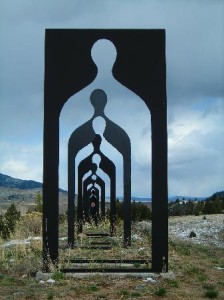
Seven Generations Sculpture, Boulder, CO (lunardawg, Mai 2010)
Second, in direct keeping with the Sacred Hoop’s precept of considering the impact of decisions and actions on the next seven generations of children, CSA takes an inherently conservative approach to new technologies such as chemical fertilization and genetically engineered (GE) plants, animals, and organisms.
Over the last four years multinational corporations have undertaken an unprecedented experiment on plant, animal, and human populations via massive infiltration of the food chain with GE organisms. According to Genetic ID of Fairfield, Iowa, 60 to 70% of all processed foods in supermarkets now contain GE components. No one can know the consequences of this kind of fundamental alteration of plants, animals, and organisms over the next seven generations of human beings.
While apparently within the box of conventional enterprise, such risky, mechanistic, mass-scale initiatives have not one generation of experience. Still, this is how the majority of agricultural resources are being lined up for the 21st Century.
CSA goes a different way. Collegial dialogue among the growers and the shareholder families who eat their food naturally governs the way the farm implements technological and dietary shifts. CSA gives families and farmers the opportunity to exercise their free will concerning the food they eat.
Most people obtain their food from the remote market channels of industrial agriculture. Thus they have neither information nor choice about participating in the great genetic experiment being conducted upon humanity in our times. Genetically engineered food is not labeled. Consumers are thereby thwarted from choosing a conservative diet; by default they are unconsciously eating a radical, experimental diet of genetically altered foods.
CSA is one of the few ways people can exercise their free will in this crucial realm. People know who is growing their food, and how it is being done. This reality is respectfully in keeping with the Sacred Hoop precept of personal sovereignty — a precept also said to be at the root of democracy.
Even while the form of CSA in America (Turtle Island) is implicitly anchored in values and precepts that have been tested and proven over hundreds of generations on this continent, CSA is endlessly innovative — striving to move wisely and efficiently into the future.
This is evident in a number of ways, including the employment of appropriate means such as organic, French-intensive, and Biodynamic growing techniques. It is further evident in the judicious use of modern tools such as computers and spaders, and newsletters, and in innovative organizational arrangements with churches, schools, food banks, inner-city programs, and suburban neighborhoods. Rather than tending toward the anachronistic, CSA is pioneering.
Third, CSA is outside the box but inside the hoop in the realm of economic ideals. An ideal CSA strives not to make a profit, but rather to make a living for the farmer and farm family, the community of plants and animals that share the acreage, the allied families and households who participate in the farm as shareholders, and the larger community and ecosystem.
In this respect, CSA farms represent a new economic and social approach to agriculture. Although CSA farms have much to learn and to put into practice in this regard, they have already proven themselves viable.
Farms arising under the impulse of CSA are guided, or at least prodded, by associative economics, which is distinct from both capitalism and communism. Capitalism puts profit at the heart of the enterprise; communism (at least as it has played out in various nations) places the state at the heart of the enterprise; associative economics holds that we must put the needs of our fellow human beings at the heart of our enterprise.
The concept of associative economy was first expounded by Rudolf Steiner in a number of public talks and writings in the years from 1917-1919. It has been developed in theory and practice by many others in the following decades. As an economic approach it is still very much in the embryonic stage of development, a lot like CSA itself.
The basic idea of associative economics is for people to make free-will associations with one another around mutual economic interests. Interested parties identify true needs in a given situation, such as a farm, and then strive to cover those needs with the least input of substance, energy and labor.
In practice, this means that all the participants in a given economic process try to listen to the needs of all the other partners. In an ideal CSA farm, for example, the active farmers listen to the needs of the member families; the member families listen to the needs of the farmers. On this basis they proceed.
No one asks, “How can we make a larger monetary profit?” That’s not the motivation. All the people try to identify the true needs of the farm and its particular hoop, or community, and then to work out ways to meet them.
This is an ideal, of course, and rarely reached in practice. Nonetheless it is a new economic approach that has guided many CSA farms in demonstrably beneficial directions — economically, agriculturally, environmentally, socially, and educationally.
Thus, the economic idea underlying CSA farms implicitly acknowledges the reality of the Sacred Hoop, and strives to be in right relationship with it, not via philosophical or scientific discourse, but through praxis – real, gritty, day-to-day labor, decisions, resources, and transactions.
**** ****
In the context of these three points, one may question whether CSA farms fall outside the box of globalization, which so often is disruptive of local community life. Perhaps not.
The surging high-tech aspects of global culture are on an apparently unchangeable ascendancy. Yet if electronic networks are to transmit messages and impulses ennobling to the human spirit, they must be grounded in something wholesome and stable.
While CSA farms cannot provide the entire wherewithal for such a civilization, they can provide an important part of the foundation.
CSA Potential
While CSAs confront many challenges and questions, they do work. They feed people, they save energy and money, they take care of the land, they make it possible for people to farm the land on a sensible scale, they provide healthy employment, they encourage a healthy diet, and they bring networks of independent households back into direct connection with each other. The farmers serve as ambassadors to the Earth for the families, and the farm as both embassy and sanctuary.
While the US alone has lost over 300,000 farms since the mid-1980s, CSA farms have generally prospered. There are now more than 1,200 such farms in America, directly involving more than 120,000 families. CSA appears poised to grow even more, albeit gradually.
In the century ahead, though, why not 150,000 CSA farms in North America? Or more? Why not millions of shareholder families? Why not at least one CSA farm in every city, suburb and town? The proven benefits could help renew and revitalize the foundation of thousands of communities and farms on Turtle Island.
These CSA farms, however, cannot be imposed externally or top-down from a hierarchy, whether governmental, academic, or corporate; nor are such farms likely to arise from what inspiration may emanate from academic papers or inspirational rhetoric.
To be true community farms, and to succeed long-term, they must rise from the grass roots based upon fully informed and free-will choices of farmers, land owners, holders of other capital, and shareholder families. People have to want to do it because they see clear benefits to themselves, their families, their neighbors, and the Earth.
Because CSA is in keeping with the basic philosophical precepts of the Sacred Hoop, and also with the physical realities described by modern science, the CSA initiative holds tremendous potential. Ultimately, it could serve as a basis for renewal not just of specific farms or communities, but possibly also for renewal of the larger human relationship with the Earth.
Might CSA eventually grow to the point where it is recognized as inside the box of evolved 21st Century agricultural approaches? We shall see. There is no certainty that CSA farms will fare well, or become significant features of culture and agriculture in the 21st Century; however, there is a distinct possibility that they will.
References:
- Agriculture, by Dr. Rudolf Steiner, Rudolf Steiner Press, London, 1972.
- Basic Call to Consciousness: Haudenausenee Elders Address to the Western World. Akwesasne Notes, Rooseveltown, NY, 1977.
- Community Supported Agriculture: Can it Become the Basis for a New Associative Economy? by Gary Lamb, article in Threefold Review (P.O. Box 6, Philmont, NY 12565), No. 11, Summer/Fall, 1994.
- Debating Darwin: Adventures of a Scholar, by John C. Greene, Regina Books, Claremont, CA, 1999.
- Farms of Tomorrow Revisited: Community Supported Farms, Farm Supported Communities, by Trauger Groh and Steven McFadden, Biodynamic Assoc., Kimberton, PA, 1998.
- Little Book of Native American Wisdom, compiled by Steven McFadden, Element Books, Shaftsbury, UK, 1994.
- Profiles in Wisdom: Native Elders Speak About the Earth, by Steven McFadden, Bear & Co., Santa Fe, NM, 1991. See Chapter 4: The Mind of Scientist, the Heart of a Mystic: Eunice Bauman-Nelson, Ph.D.
- Superstrings: A Theory of Everything, by P.C.W. Davies, New York, Cambridge University Press, 1995.
- Superstrings and the Search for the Theory of Everything, by David F. Peat, Chicago, Contemporary, 1988.
- Wholeness and the Implicate Order, by David Bohm, Routledge, NY, 1996.
The original & classic book on CSA farms
Farms of Tomorrow Revisited
Back in 1990 when Trauger Groh and I coauthored Farms of Tomorrow there were perhaps 60 community supported farms (CSAs) in America. Seven years later, when we returned to the subject to research our book, Farms of Tomorrow Revisited (1998), we found that there had been a phenomenal surge of growth in the movement, and a general deepening of commitment and knowledge among the existing farms.
In the face of the world’s general agricultural and social news, this struck us as wholesome and heartening.
 Our first book contained basic essays on new structures for community supported farms which acknowledged that farming is not just a business like any other profit-making business, but a precondition of all human life on earth, and a precondition of all economic activity. As such, farming is everyone’s responsibility, and has likewise to be accessible for everyone. Emerging awareness of this reality was, we felt, steadily inspiring the creation of CSAs: new farms for a new time. The millennium, after all, lay just 10 years ahead.
In addition to essays, Farms of Tomorrow contained case descriptions of community farms to give farmers, and those who aspire to become farmers, practical advice from people who were pioneering the movement, and also models of how the new ideas were being brought to life.
The book was well received because it seemed to meet an imminent need in a world situation where fewer and fewer people participate in farming, which has become largely remote, industrialized, and mineralized, with harshly negative consequences for food quality, life quality, and the environment. Eventually the book was translated into Russian, Korean, and Japanese.
When the original book sold out, the question arose of whether to reprint that version, or whether the experience of nearly seven years justified a new book. We decided for the latter: to maintain the core of the first book, and to add the insights gained over the years.
We named the new book Farms of Tomorrow Revisited, for through it we revisit both the concepts, and the actual farms described in the first book, and are thus able to document their development. To round out our return visits, we added descriptions of many other farms that reveal yet other aspects of the central agricultural, environmental, economic, and social questions. We found a host of new CSAs to choose from, at that time there over 1,200 CSAs in the USA, involving an estimated 100,000 households. (As of 2016, according to the USDA, there may be as many as 12,000 CSAs in the USA. There are many thousands more around the world.)
We wrote five new essays on pertinent themes: the economic, spiritual and legal questions faced by CSA; the development of community; the role of animals; and observations of farm-member families.
We also made an effort to describe the larger context in which CSA arises: global, industrial agriculture. This context will have a continuing impact on the health of the earth, as well as on CSA itself.
Scholar Marcia Ostrom contributed an essay on the emergence of CSA coalitions, and land-trust expert Chuck Matthei authored an invaluable appendix on securing and holding land for the farms. Dozens of other people contributed insights via discussions or shared materials, and yet others offered beautifully written descriptions of their CSAs.
Thus with this wide community support, we were enabled to enrich Farms of Tomorrow Revisited far beyond our original vision, and to produce a volume that we hope will stand in long and provocative service to the next stage of CSA development.
“Much is at stake, and we are the keepers of the Earth.”
– Lincoln Geiger, Temple, NH
As we posited in our first book, and as we reiterate in this new volume, agriculture is the foundation of modern civilization. It will remain so in whatever ages are yet to come. Without a steady supply of clean, life-giving food, we have neither the leisure nor the energy to develop other aspects of life, such as industry, science and art.
Worldwide, our agricultural foundation has been mutating dangerously. Global agricultural giants offer what is to many observers a troublesome vision of the future with the millennium now less than two years away.
We share in the widely held view that our agricultural foundation requires immediate and comprehensive restructuring, that it might wisely support the cultures that rise upon it. But how can farmers and communities even begin to approach this task? Community farms, we have come to see, offer a range of clear, practical and enormously helpful possibilities.
Farms of Tomorrow Revisited exists as a book because of the Biodynamic Association, which supported the research, writing, and publication. Thus, while insights come from all quarters, the new book is rich in both the foundational and emerging insights of biodynamics as articulated by a corps of veteran practitioners.
We hope a wide range of citizens will be informed by these voices. After all, the problems of agriculture and the environment belong not just to a small minority of active farmers; they are the problems of all humanity, and thousands of people are searching for new ways and new solutions.
As we conferred and looked to the universal questions of agriculture and society, and considered the manifold modern dimensions of these questions, we understood quickly that there is no universal solution. There is no simple recipe or remedy for the many challenges we face. But there are positive directions to move in.
Hundreds of farmers and thousands of families are moving in those positive directions through the vehicle of CSA. Yet while the movement’s growth has been phenomenal, it is still very much at the seedling stage of development.
In plain terms, a CSA is a community-based organization of consumers and growers. The consumer households live independently, but agree to provide direct, up-front support for the local growers who produce their food. The growers agree to do their best to provide a sufficient quantity and quality of food to meet the needs and expectations of the consumers. In this way the farms and families form a network of mutual support, whether the community be a region, a neighborhood, a church, a school, or something else.
Within the general framework of CSA there is wide latitude for variation, depending on the resources and desires of the participants. No two community farms are entirely alike.
The experiments in farming described in “Farms of Tomorrow Revisited” represent new social and ecological forms of agriculture which have arisen in recent years while traditional family farms have declined and industrial agriculture has increased. These new farms involve many local families directly in the decisions and labor which produce the vegetables, fruits, milk, and meat they eat.
As we revisited the subject to do research, we learned that some CSAs have risen only to collapse. They failed because of poor growing technique, poor financial management, or poor community building skills. Yet many more community farms succeed than fail, and many important lessons have been learned.
As we conceive of it — and as it is being practiced at a great many farms — CSA is not just another clever, new approach to marketing for farmers. Rather, community farming is about the necessary renewal of agriculture through its healthy linkage with the human community that depends upon farming for survival.
From experience we also see the potential of community farming as the basis for a renewal of the human relationship with the earth.
While CSAs confront a host of challenges and questions, they do work: they feed people, they save energy and money, they take care of the land, they make it possible for people to farm the land on a sensible scale, and they bring networks of independent households back into direct connection with each other and the Earth.
deep agroecology, #deepagroecology
– End –
Trauger Groh of Temple, NH has been a farmer in Europe and America for over 40 years. Steven McFadden is director of Chiron Communications.
How to order
Farms of Tomorrow Revisited: Community Supported Farms, Farm-Supported Communities by Trauger Groh and Steven McFadden – ISBN # 093825013-2($17.50 US/ $26.25 CAN).
The book is available for Kindle readers from Amazon.com (see link at top of page), and for all Apple devices through the iTunes and iBook stores.

Consultations

Consultations with Steven McFadden
 For thousands of years, in all parts of the world, people have carefully observed the stars, planets, and eclipses. As patterns became apparent in the sky, observers noticed the patterns mirrored on earth, as if a holographic relationship existed among earth, sky and people. Thus eventually over centuries of observation an astrological seed thought emerged: As above, so below.
 An astrological consultation is one vehicle for striving toward the ideal articulated by the ancient Greeks, Know Thyself. That advice remains relevant.
By considering the symbolic language of stars and planets and their relation to earthly patterns of experience, people may make illumined decisions as they move through life — employing intelligence, free will, and informed choice.
As a student of astrology for many decades, I’ve had the privilege of learning from some talented, insightful teachers, and also had the honor of consulting with hundreds of people about the core issues they are engaged with in life.
I’m one of the founding members of the Santa Fe Chapter of NCGR (National Council for Geocosmic Research). For many years I was a member of the late, internationally celebrated Santa Fe Astrology Forum, and also a regular guest at the popular Star*Talks hosted by Arielle Guttman and Heather Roan Robbins. In 2016-17 I had the opportunity to host the Santa Fe Astro Assembly at the renowned Santa Fe Oxygen & Healing Bar.
The ideals I maintain in client consultations are clarity, practicality, and intuitive insight. I strive to give clients objective feedback — in plain English — on the course of their life path, and what they are currently experiencing as mirrored in the sky signs.
My consultations range far and wide. As requested I give specific attention to the forces and circumstances that are bearing upon, and poised to bear upon a client’s life.
You may schedule a consultation in person in Santa Fe, or set up an appointment with me for a remote consultation from anywhere in the world either by telephone or over the Internet via Skype. I provide all clients with a horoscope and a digital recording of the consultation .
How to set up a consultation

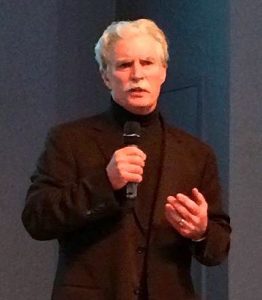
Steven McFadden (Photo by E. Wolf, 2016)
Before using the contact form to arrange an appointment with me, you should determine the location, date, and time of your birth. Accurate birth time – to the minute if possible – is of key significance.
If neither you nor your family recall this information, seek a copy of your birth certificate or birth registration. Contact the hospital where you were born, or the town or city clerk in the municipality where you were born. This is a routine request for them, and usually involves a small fee ($5-$10).
When you have all the information, please use the contact form to request an appointment and we can set a time to meet online.
Rates
Natal chart analysis (including discussion of relevant transits and progressions) $150.00. You may pay online with a credit or debit card using PayPal, or by sending a check. Contact me via email for a mailing address.

* * * * * * * *
My hourly rate for a follow-up consultation (after initial session) is $80.00. To pay for a one-hour consultation, please click on the PayPal logo:

* * * * * * * *
Note Well:
I strive to provide useful services and information. My consultations are based on each client’s unique personal data, and are tailored – from start to finish – for you as an individual. I maintain strict client confidentiality.
You are responsible for your own life and future. My task as an astrological consultant is to support and to guide you toward understanding, and toward the results you desire where you have the ability and circumstances to pursue them.
No astrological forecast is a guarantee. You have free will, and you choose how to respond to the circumstances of your life. Only you are responsible for your decisions, actions, and how they shape your future. What I do – what any competent professional astrologer does – is to help illuminate your specific gifts, purposes and fulfillments, to indicate conditions and forces you are likely to experience, to explore with you a range of possible reactions, and to specify auspicious times to strive toward your objectives.
Call of the Land ~ Deep Agroecology

Chiron’s Cave. Listen to the Call of the Land. Learn about deep agroecology.
The unavoidable challenge of the 21st Century is to respond creatively and wholeheartedly to the urgent call of the land. Our survival depends upon our response. With community and creativity we can bring about environmental repair, economic security, and social renewal. This is the call of the land.
The Call of the Land is also the title of one of my books, a response to that call. The book also sets out a forthright description of essential survival-level relationships with the web of life that demand our attention, our intelligence, and our will.
 The book describes a wide range of models – creative 21st Century agrarian responses – to the urgent call of our land. The full title of the book tells the story – The Call of the Land: An Agrarian Primer for the 21st Century – 2nd edition.
The book is concise in the realm of theory theory, and long on actual, practical working examples to show a broad range of possible creative, positive responses. The Call of the Land is loaded with model after model of ways for families, neighborhoods, communities, schools, and churches to meet the challenge of caring for the land and providing an ample supply of clean food.
 My blog for Deep Agroecology & The Call of the Land expresses the urgent call as I and a host of other listeners hear it. In particular it explores positive creative responses to the call of the land, that we might have an abundance of clean food and heal the profoundly distressed environment in which we and our children dwell.
DEEP AGROECOLOGY
As 2020 unfolds, I’m pleased to steadily announce publication of my new book: Deep Agroecology: Farms, Food, and Our Future. Click on the covers below to learn more, or to purchase a copy.


Agrarian Archive: A Sampling of Articles and Essays
A Basic Call to Consciousness: Still Resounding.
Food Coops 2012: Growing Strong.
Fate of the People is Linked to the Fate of the Land: Wendell Berry.
Humane Husbandry: Nebraska Tries to Blaze a Trail
Latter Day Luther Nails Troubling Thesis to Doors at GMO Farm Citadels
Outside the Box, But Inside the Hoop:
Community Farms (CSA) at the Turn of the Millennium.
Rivulets of Revelation Flow from Two Farm & Food Conferences
Community Farms in the 21st Century
(2-part series on the history & development of CSA in the USA)
Dig Deeper ~ CSA Farms and Aggregators Thresh Things Out
(Rodale’s New Farm Magazine, Summer, 2015)
++ About 200 substantive articles and growing on my blog Deep Agroecology ~ The Call of the Land.
deep agroecology, #deepagroecology
Books





Homepage

 Your actual, real-time Odyssey parallels this Summer’s ‘blockbuster’ filmJune 7, 2026
 New and improved: Classical ConsiderationsMay 14, 2026
 Behold the Light: Farms, Photons, FuturesApril 17, 2026
 Our Collective Odyssey: Song and Story for the Generations ArisingJanuary 29, 2026
 Musical Invocation: Odyssey of the 8th FireJanuary 15, 2026
 Marvelous Meme Museum Makes MemoriesJanuary 10, 2026
 Podcast book review of Deep Agroecology (5 minutes)November 2, 2025
 Half a Century Later: My Odyssey in JournalismMay 6, 2025
- « Previous Page
- 1
- …
- 9
- 10
- 11
- 12
- 13
- Next Page »