The Call of the Land – Agrarian Primer for the 21st Century
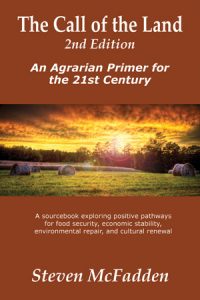
In the context of the rapidly changing farm and food environment, Norlightpress author Steven McFadden has written a greatly expanded 2nd edition of The Call of the Land: An Agrarian Primer for the 21st Century.
The new edition is an effective way for people to learn about and to teach food security. It’s loaded with model after model of ways for families, neighborhoods, communities, schools, and churches to meet the challenge of caring for the land and providing an ample supply of clean food.
The acclaimed 1st edition of The Call of the Land was named one of the Best Books of 2009 by Food Systems Network NYC. The 2nd edition, far more comprehensive, is making a deeper, wider, and even more positive impression.
The Call of the Land is an excellent outreach tool for schools and farms to help educate and build community support. The more the community knows about what sustainable agrarian initiatives are doing for the land, for food, and for life, the more strongly the community will stand in support.
While no single remedy meets the many challenges to our food and farms, hundreds of positive, creative options are already in place. This book sets them out plainly and powerfully. Every household, library, church, and school should have a copy.
The Call of the Land illuminates the paths forward, revealing a range of models to establish a sustainable agrarian foundation for the fragile high-tech, digital-wave culture emerging so dynamically in our world. We have commenced a transition the likes of which few are prepared for, but to which we all can respond with intelligence.
The book gives voice to a swelling chorus of millennial agrarians who are working in cities, suburbs, countryside schools, churches, companies, and campuses to create a clean, secure, sustainable food system as a healthy foundation for the dynamic, high-tech culture that is emerging.
deep agroecology, #deepagroecology


 Reiki Training offers a disciplined foundation in hands-on, human-energy therapy. Everyone can learn. For parents, friends, health-care professionals, massage therapists, homemakers and others can complement their knowledge with understanding and practical skill in the realm of human-energy medicine.



 Snyder revealed himself as one the many elders we had set out to find on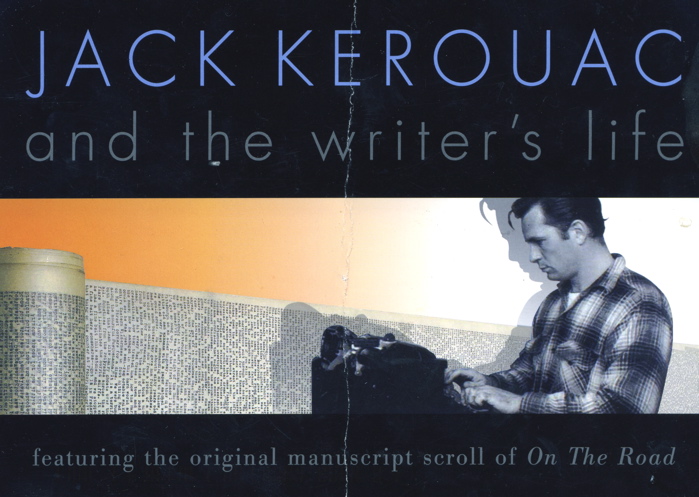
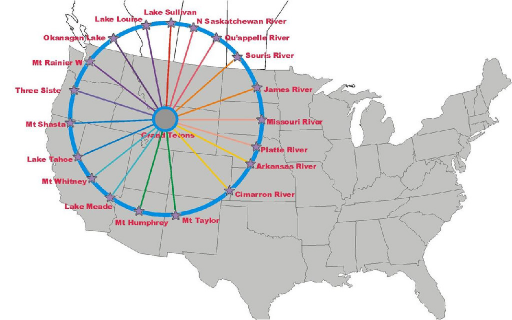
 While dwelling amid the high mountains along the North American Continental Divide, Bennie LeBeau of the Eastern Shoshone tribe experienced a torrent of dreams and visions, especially in 1999. The visions directed him to set in motion the plans for a massive Medicine Wheel Ceremony.
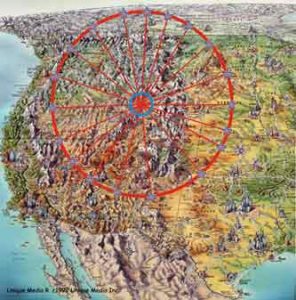 A Medicine Wheel is an ancient spiritual tool with a history of widespread use all over Turtle Island (North America). Stones are set to mark the Four Directions of North, South, East and West, and also of other major points. In this manner, if done with knowledge and respect, a sacred space is defined. Within that space, the people can direct thoughts, feelings and actions toward a unified idea.

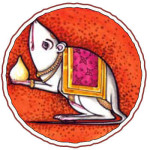 In the Medicine Wheel teachings of Turtle Island the South is a direction sometimes represented by Mouse. Mouse is so small and defenseless against the rest of the world that he must rely on trust and instinct to live. Much larger forces of Spirit are at work in the world, and Mouse understands how humble a creature he is in relation to all this. But good and surprising things can happen when trust leads Mouse to make a bold move for survival, guided by Spirit.
 In the context of Grandfather’s words, the ravaged land all around Turquoise Mountain bespeaks an ugly story. Over many years
  The call for people of all nations, races, and traditions to participate in this massive Medicine Wheel ceremony comes at a time of widespread military conflict, and of profound environmental damage to the earth, the wind, the fire and the water. It is also a time of intense culture war.

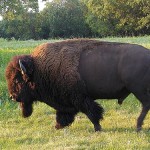 Of note, Yellowstone Park is also the site of a legal, on-going Buffalo slaughter. The Buffalo are killed to prevent them from becoming “too numerous.” In native understandings, Buffalo are widely considered to be healers of the earth. The places where their hooves touch the soil are especially fertile.

 When Gaia exhales in spring, life returns to the surface. That vitality expands in summer as the planet’s surface covers itself with visible proof of life: leaves, blossoms, buzzing insects, and rising passions. Earth puts forth what she has thought in the winter in the form of summer’s growing and flowering things. As the cycle of the year continues around its spiral wheel toward autumn, Gaia begins again to inhale in earnest, to draw the life forces back in.
 As human beings battle spirit-denying forces within, the battle is mirrored dramatically in the cosmos through the outer cycle of the seasons. In the rhythmic breathing of the earth, exhalation reaches its peak near the Summer Solstice. The nature forces which were concentrated deep within at Winter Solstice have been fully exhaled. Steiner put it poetically: “they surge out to unite with the cloud structures and everything that human sight encounters in the heights above.”
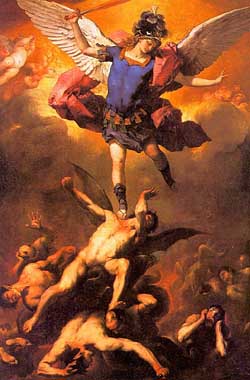
 Scalding, sulfuric spirits surge through the summer world but as the seasonal wheel turns an opposing element eventually arises: meteoric iron. The sensational meteor showers of late summer and early autumn correspond symbolically to the flashing sword of Michael, with which he battles the dragon. As above us, streaking meteors cleanse the soft, dark sky of summer’s sulfurous heat; so below, iron courses through human blood to give us clarity and will for cutting through roiling passions.
 “A lot of the spiritual work people do is just putting whipped cream on top of a bowl of garbage. You’ve got to clean up the garbage first before you add the whipped cream.
 “What happens when you grow old and no longer wish to compete with younger people? Who do you look toward for models? Someone who is old, or someone who is an elder? And what is the difference? How do you become a sage? It’s not necessarily the result of book learning.
 So the story is: a person comes to the wise man and says, ‘how do you get wisdom.’ He says, ‘wisdom comes from good judgment.’ And how do you have good judgment? So the wise one says, ‘from experience.’ And where do you get experience? ‘From bad judgment.’
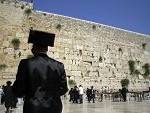 “Rabitizikel is a teenager, and the father is the venerable head of a Hassidic group. Suddenly there appears before them a person who says, ‘Rabbi, I need some help, I’m about to get married and I need some money badly.’ The Rabbi looks at him and says, ‘don’t you know you’re dead, you’ve died already.’ The man says, ‘what are you talking about? They are waiting for me. I need the money, please help me.’ The Rabbi lifts up the man’s coat and shows him that underneath his coat he has shrouds, the shrouds with which he was buried. Suddenly, it dawns on the man what has really happened and he disappears.
 “There was a pearl beyond any price and he had to go find that pearl. The pearl was in Egypt. It was guarded by a dragon, a very fierce dragon. The king called his son and told him that he must do this, and don’t you want to some day assume the role of being a person of majesty? The son said ‘yes, I want to do it.’ The whole dream, the whole notion excited him a great deal — yes, he wants to do the heroic thing.
 “I start looking ahead,” Zaida Zalman says, “and suddenly I find I am looking through the rearview mirror. When you ask, ‘what would the future look like,’ I then go into a nostalgic past, a romanticized past, and then go into a tribal thing, and think for a moment, it would look like that. But it’s not going to look like that.

 I invite you to check out this