“Our ancestors made this great agreement on our behalf 400 years ago. Now is the time for us to think about the people living in the next 400 years.” – Hickory Edwards (Onondaga Nation)

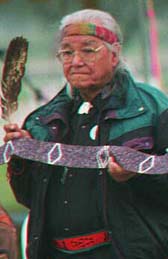
- The Two-Row Wampum Belt.

Long ago when the colonial peoples were seizing possession of the land they would come to call North America, they entered into sworn agreements with the human beings who already occupied the land. The Two Row Treaty, the first of those solemn agreements, is as of 2013 now 400 years old.
To serve as a permanent record of the treaty, the Haudenosaunee (Iroquois) people wove a belt of beads made from wampum sea shells, their traditional way of recording sacred agreements, a means more elegant and enduring than the fragile sheets of paper marked with ink that the colonial settlers used.
Commemoration of that treaty is reaching a crescendo late this summer with an elaborate series of lectures, concerts, celebrations, historic enactments, and collaborations planned by The Two Row Wampum Renewal Campaign.
The intention is to polish this centuries-old covenant chain of friendship, to protect our shared environmental inheritance, and to build support for resolution of various land rights actions.
The call to honor the treaty comes in the context of perfect faithlessness. The USA has broken or violated every single one of the nearly 500 legally binding treaties it has entered into with various Native nations.
Thus, the Two Row Wampum campaign has resounding karmic implications for peace, friendship, environmental responsibility and justice.
In recent years, Native peoples have increasingly emphasized that ecological stewardship is a fundamental necessity for this continuing friendship, for a more just peace between peoples, and for a sustainable, shared future in parallel on the land we inhabit together.





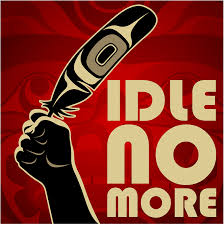


 Right now a small band of women from the Ojibwe native nation is
 The wind spiked out over Cape Cod Bay, frothing the blackened waters into angry, spitting caps. A great, bitter wind was upon the land and the sea. Still, the people came. In the face of icy needles cast by the unrelenting gale, 40 people broke from their cars into a wild, scattered search for a place with a scrap of windbreak. They needed protection, for they had arrived to light a sacred fire at First Encounter Beach, just five years before the Millennium.
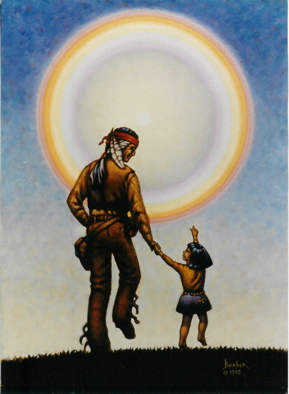

 A belt of beads is the traditional Algonquin device employed to record the solemn and binding agreement they entered into in 1793 with the US and Great Britain. This was a time when the newly formed government of the United States was defining its corporate existence upon Turtle Island and the Canadian nation did not yet exist. Native nations were full and equal partners to the treaty, with the same standing as the United States and Great Britain. But the Algonquins did not use black marks upon paper to keep important records; they used beads woven into beautiful, long-lasting belts.

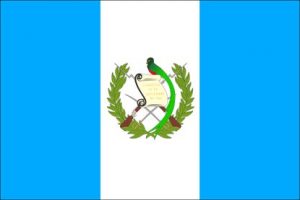 When the war finally wound down in the 1990s, the United Nations Truth Commission conducted an 18-month investigation.* The UN found massive violations of human rights by the government of Guatemala with the complicity of the US government. The UN report stated that acts of “aggressive, racist and extremely cruel” violence descended to the level of genocide directed against the country’s indigenous Mayan population.
 Carlos Barrios says he was born into a Spanish family on El Altiplano, the highlands of Guatemala. His home was in Huehuetenango, also the dwelling place of the Maya Mam tribe. With other Maya and other indigenous tradition keepers, the Mam carry part of the old ways on Turtle Island (North America). They are keepers of time, authorities on remarkable calendars that are ancient, elegant and relevant.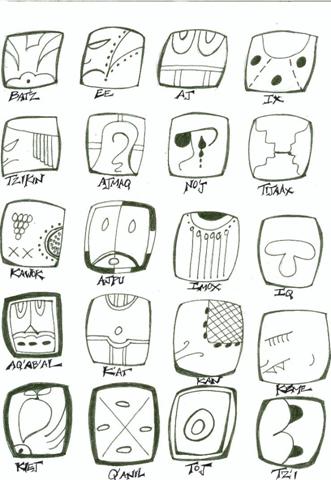
 From his understanding of the Mayan tradition and the calendars, Mr. Barrios offered a picture of where we are at and what may lie on the road ahead:
 As he met with audiences in Santa Fe, Mr. Barrios told a story about the most recent Mayan New Year ceremonies in Guatemala. He said that one respected Mam elder, who lives all year in a solitary mountain cave, journeyed to Chichicastenango to speak with the people at the ceremony.
 “An excellent read. Informative without being preachy. Exactly what I have been looking for. Bravo!” – Smashwords Review written by W.E.L. about Native Knowings: Wisdom Keys for One and All

 When our Star appears in the East (about 4:00 AM), the mounds for 12 staffs will be marked and put in a circle with an opening to the East. All nations represented with a staff will circle around the center fire for the entrance of the sacred pipes, to be placed in the Four Directions with prayer and song.
 Honoring the Sacred Path for the Five Finger Ones will be done with a Mountain Song, ending with the Blessing Way. The prayer sticks will be taken to the mountain spirits for their guidance and wisdom, as our journey begins here.