I created this meme for my blog at The Call of the Land and felt it was also worth sharing with visitors to this associated Chiron Communications blog.

I created this meme for my blog at The Call of the Land and felt it was also worth sharing with visitors to this associated Chiron Communications blog.
A legendary elder of ancient Greece, the man named Diogenes gained renown by walking through the streets of ancient Athens in broad daylight carrying a lighted lamp. When people would ask him why his lamp was lit in the day, he would reply not that he was looking for an honest man, as is so often reported, but rather that he was “looking for a Human Being.”

Diogenes – was born in Sinope, Turkey (4th Century BCE) but moved to Athens and became the leader of a faction known as The Cynics. Diogenes modeled himself on the example of Hercules, believing that virtue is revealed in action and deeds, not in theory or talk. He lived on the streets and by his wits, without luxuries. Photo of Diogenes statue in Sinope courtesy of Creative Commons.
* * * * * * * *
Diogenes’ quest for Human Beings struck home with me. His search in classical Greece parallels one of the core ethical considerations in classic Native American wisdom ways. For me, someone who has walked hundreds of miles on Native pathways but only a few steps on the marbled hallways of classical Greece, this point of reckoning seems eminently worthy of consideration.
The various cultures that have come to North America over the last 500 years have not yet completed the process of grafting healthfully with the root native culture that has been on the land for many thousands of years. There is a great need for this interweaving to proceed, and here is a foundational point of union.
Understanding of what it means to be a Human Being — in any era of time and any place in the world — is a fundamental wisdom question contemplated in the Americas for millennia.
 Native orators have often given eloquent expression to the idea. Among the well- spoken tradition keepers, I include the late Leon Shenandoah (1915– 1996), an elder and a statesman for the Haudenosaunee (Iroquois) people of The Great Turtle Island (North America).
In the pages of To Become a Human Being, Grandfather Shenandoah says that becoming a Human Being means attaining the highest level in this life, rising above instincts or base emotions to reach a place of equanimity and integrity, recognizing that we are all spiritual beings. A spark of spirit dwells in all life, and a Human Being knows that and acts in the world with that reality held mindfully.
“To become a Human Being is to rise to an expanded level of consciousness by living in physical and spiritual communion with the Earth and the various creatures who share life with us on the land,” Grandfather Shenandoah observed.
Grandfather Shenandoah encouraged everyone to “be the firekeepers that we all are, so that we’re able to instill small fires in each human being and give them hope so that they’ll begin to do good for other human beings.”
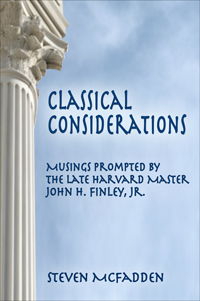 My intent as author of the ebook, Classical Considerations, was to strike such sparks by passing on the teachings of some faithful firekeepers, in particular the late Harvard Master and Classicist, John H. Finley, Jr.
“The doctrine of Horatio Alger, of getting ahead in life, continues to be important,” Finley told me during one of our interviews. “Yet the purpose of mind is not chiefly for you to get some place in society. Our gift is mind; we can see things. That’s what it’s all about. It really is.
“In your brief span, to make sense of all the interesting people you’ve known, all the interesting books you’ve read. This panorama…is increasingly your reward in life.
“After all, the self is both the hero and the villain in life. It is the villain insofar as it reduces the great and beautiful world to the idiotic closet of one’s identity. It is the hero insofar as it tries to go to the window, look out, and see how big the world is and how many people there are and how beautiful the sunlight is.
“It seems to me that waking is far more desirable than dreaming.
Three seed ideas were among the many elements that underlie the actions of the first CSA farmers who in 1985-86 established new ways of farming in America. Those ways have emerged in subsequent seasons to yield as many as 10,000 contemporary community supported farms (CSAs) in cities, suburbs, towns, villages and churches across the land.

Photo: Maggie Mehaffey
The CSA model has proven to be a natural for adaption and innovation. Many latter-day CSAs, however, have overlooked or bypassed some of the seed ideas as they have established a wide range of variations on the CSA theme. Yet the seeds of the initial CSAs remain viable, perhaps even more so in our era of profound global change. They are freely available to anyone who chooses to cultivate them.
Alice Bennett Groh is part of the founding group for the Temple-Wilton Community Farm, in New Hampshire. In November, 2014 when she spoke at a Peterborough Grange ceremony to honor CSA pioneers, she put her focus on three of the seed ideas that helped community farms to become established in the USA and to grow.
With eloquence and economy of language, she told of how her husband Trauger Markus Groh partnered with Anthony Graham and Lincoln Gieger to cultivate new thinking, and thereby to initiate their highly productive, economically sustainable, and environmentally radiant Biodynamic farm on rocky, rolling hills flanking the Souhegan River.

In conversations with me after the Grange-CSA event, Alice spoke further about those seed ideas:
1. The first seed that Alice recalled has to do with the ownership and financing of community farms, questions Trauger Groh engaged early in his life while living in Germany, questions he engaged again with compatriots at the Temple-Wilton Community Farm, and questions which he explored in his autobiography, Personal Recollections: Remembering My Life and Those Who Mean So Much to Me (2010).
The general agricultural situation in Germany in the 1960s, according to Trauger and Alice, was that most farms were economically dependent on using foreign workers and paying them low wages. This set up ensured that the farm workers would remain poor and have no stake in the land. Meanwhile, in comparison with conventional farms where production rose steeply with the addition of synthetic chemical fertilizers, herbicides and insecticides, the financial return from harvests was unsatisfactory for organic and Biodynamic farms.
 In this economic and social environment, how could organic or Biodynamic farms survive and prosper into the future? At Buschberg Farm in the 1960s, Trauger and his farm colleagues of that era were all actively cultivating Anthroposophical and Biodynamic understandings. They recognized that new economic, social and agricultural forms were needed for the Farms of Tomorrow.
Understanding that isolated farms and isolated farmers had a dim future in the shadow of corporate-industrial agriculture, they strove to create a wider, village-like arrangement based on free-will associations of households with the farm. One great aim was to open the farms to the participation of many people, to share the responsibility of growing food and caring for the earth cooperatively. To make that possible, it was necessary to change the relationship of the ownership to the land, and to give up the conventional employer/employee wage relationship.
They formed a co-operative work group for the Buschberg Farm Agricultural Working Group. The group was composed of about 40 people, with three active farmers including Trauger. Together they bore responsibility for the farm and its risks.
They developed a co-operative property association to hold the farmland in trust, and to act as a co-operative credit guarantee company. Attorney Wilhelm Barkoff designed this risk-sharing arrangement in partnership with the Co-operative Bank in Bochum, near Dresden, Germany.
Nonfarmer community members worked alongside the active farmers in managing the farm, but did not interfere with it. They contributed to the farm from their own life experience. Each member of the work group was given a loan of 3,000 DM (Deutsche Mark) by their Community Bank. This functioned as a line of credit, which the nonfarmer members of the community could then assign to the active farmers to give them working capital and enable them to establish a farm budget. The financial and health needs of the active farmers themselves and their families were built into the budget for the farm. Withdrawals were deducted and income credited.
On this basis the active farmers went about their business. If they made a profit they turned it over to the members of whole farm community: if the farm had a loss then the farm community members agreed to make up the difference. They shared the risk. This approach to free-will community trust ownership of the land and shared risk was among the original CSA seed ideas.
2. While speaking at the Grange ceremony for the pioneers of CSA, Alice told also of how in the 1970s Trauger came to know Peter Berg, a farmer in south Germany. Berg came up with an idea for a box scheme – a weekly box of Biodynamic vegetables for people who wanted them, an approach which he was able to extend to Dornach, across the nearby border with Switzerland.

The Sower – V. Van Gogh
As a member of the Board of Directors for Fondation la Bruyére Blanche and as an agricultural consultant, Trauger visited Dornach many times in the early 1970s, and learned about the approach Berg was taking. Then in the 1980s, an American named Jan Vander Tuin also learned of this approach while visiting in Switzerland. He became passionately enthusiastic. Later when Vander Tuin visited western Massachusetts in 1985, he told about the pre-paid box scheme to a core group of people including John Root, Sr., John Root Jr., Charlotte Zenecchia, Andrew Lorand, and Robyn Van En. They formed The CSA Garden at Great Barrington, later known as Indian Line Farm.
The two communities – Temple-Wilton CSA in New Hampshire and Indian Line CSA in Massachusetts – were less than 150 miles apart. They connected and communicated with each other before the first CSA planting season in America, 1986.
Rather than an agriculture that is supported by government subsidies, private profits, or martyrs to the cause, CSA pioneers strove to create organizational forms that provide direct, free will support for farm and farmers from the people who eat their food by receiving a share of the harvest they have made possible. This is a second seed idea at the core of CSA.
3. Alice Bennett Groh concluded her talk for the Grange by telling of how in the early 1980s Trauger visited with a farmer named Asgar Elmquist and his wife, Mary. The Elmquists were houseparents at Camphill Village, Copake, NY, and Asgar was also actively farming.
 Camphill Villages are set up as households, with food budgets. It was the agreed custom for housemothers to use thier budgets to purchase food for all the residents of the households. One option was to buy food for the households from local farmers, such as Asgar. The houseparents were in fact buying from him, but toward the end of each month as house budgets ran low, the housemothers would switch and shop supermarkets instead to save money. That was not working for Asgar because it invariably left him stuck with food that he had produced but could no longer sell while it was fresh.
“Wise fellow that he is,” Alice observed, Asgar proposed that the households pledge a certain amount of budgeted money up front each month to support his general farming efforts, to support the whole farm. In return he would agree to deliver produce to their doors throughout the entire month. That upfront agreement worked better for everyone.
Trauger Groh later wrote in his autobiography. “That farms flourish must be the concern of everyone, not just the individuals working as farmers.” The idea is for the community to support the whole farm, not just to be occasional consumers buying boxes of carrots, lettuce and squash. That way the farm is in a position to reciprocate and support the community. The community supports the farm out of free will association, and the farm supports the community out of the bounty of the land.
 Back in the day, Asgar told Trauger that after he changed over to this arrangement, everything on the farm began to grow better. He explained that the nature spirits, or elemental beings weaving their works in the farm fields, have no relationship to money and no conception of it. If a farmer looks over a row of carrots and principally calculates what money he can earn with them, the elementals cannot grasp this abstraction. But if a farmer is instead thinking about bringing the crop to its highest perfection to nourish human beings and livestock, the elementals can in their own manner comprehend and respond.
“Elemental beings want what is good, healthy and right for the soil and the situation,” Alice told me. “If a farmer can be freed from the economic stress of counting rows of carrots to calculate how many rows he needs to make how much money, then the farmer can think instead of what the soil, the plants, the farm, and the farm community need. With these thoughts about concrete matters such as food and eating, rather than thoughts about the relatively abstract and artificial concept of money, everything grows better.”
“We can’t see the forces of nature,” original Indian Line CSA farmer Hugh Ratcliffe once told me, “but we can see the effects of working consciously with them.” Careful observation of nature, and intelligent cooperation with it, are among the great contributions of Biodynamics. And that’s how CSA pioneers approached it in the USA.
Considered through the lens of economics, CSA was not originated as some new, improved way to sell vegetables, milk and meat, nor was it thought of in any way as a “marketing scheme.” The seed efforts of CSA pioneers were aimed at the basic economy of finding ways to free farmers to do the tasks that are right for the farm, the people, and the earth. This intention represents a third seed at the core of the original CSA impulse.
The Temple-Wilton Community Farm in particular has taken up these seed ideas from the beginning. With effort it has cultivated and refined the seeds over 28 growing seasons: shared ownership and risk, free-will participation as members of the community, and intelligent partnership with nature rather than brute efforts at domination and control.
As Alice observed in the aftermath of the Peterborough Grange-CSA honoring ceremony, “it is unusual, to say the least, maybe even miraculous, that in these times of great social struggle that something that we approached with idealism and dedication has prospered and has had such a profound effect in the world.”
– Steven McFadden, December 2014

Three seed ideas were among the many elements that underlie the actions of the first CSA farmers who in 1985-86 established new ways of farming in America. Those ways have emerged in subsequent seasons to yield as many as 10,000 contemporary community supported farms (CSAs) in cities, suburbs, towns, villages and churches across the land.
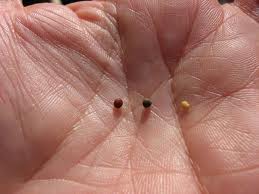
Photo by Maggie Mehaffey
The CSA model has proven to be a natural for adaption and innovation. Many latter-day CSAs, however, have overlooked or bypassed some of the seed ideas as they have established a wide range of variations on the CSA theme. Yet the seeds of the initial CSAs remain viable, perhaps even more so in our era of profound global change. They were explored in the book on CSA that I authored with Trauger Groh, Farms of Tomorrow. And they are freely available to anyone who chooses to cultivate them.
Alice Bennett Groh is part of the founding group for the Temple-Wilton Community Farm, in New Hampshire. In November, 2014 when she spoke at a Peterborough Grange ceremony to honor CSA pioneers, she put her focus on three of the seed ideas that helped community farms to become established in the USA and to grow.
With eloquence and economy of language, she told of how her husband Trauger Markus Groh partnered with Anthony Graham and Lincoln Gieger to cultivate new thinking, and thereby to initiate their highly productive, economically sustainable, and environmentally radiant Biodynamic farm on rocky, rolling hills flanking the Souhegan River…
The rest of the story in follows freely on my blog for Deep Agroecology: The Call of the Land.
Here are the results of my first project with an online meme-making app:

November 24, 1995 – A band of pilgrims gathered at First Encounter Beach on Cape Cod Massachsetts with Grandfather William Commanda and Frank Decontie of the Kitigan Zibi Anishinabeg, and Jose’ Lucero of the Santa Clara Pueblo.
In a circle around the roaring ceremonial fire on the beach, the pilgrims vowed to begin a prayer walk in June of 1995 from the Eastern Door at the Atlantic Ocean to the Western Gate at the Pacific.
“Moses made pilgrimages to the mountain, and Jesus spent forty days in the desert. All throughout history, people have made sacred journeys.” – don Jose’ Matsuwa
The rest of the story… http://www.8thfire.net/Day_0.html

In this brief video clip, Chief Phil Lane shares his understanding of a key ancient teaching of the Americas: the reunion of the Eagle, Quetzal and Condor.
https://www.youtube.com/watch?v=6IDOFyv9Zdw
 Throughout history most successful and long-lived civilizations have held a place of respect for elders, and benefited from their life wisdom. By and large this tradition is missing today, to the detriment not only of elders but also of society.
Each moment, each day, each one of us grows older. Thanks to medical advances and wide emphasis on personal fitness, most people will live long enough to be considered old. The average life span has, in fact, been steadily increasing since the dawn of the Twentieth Century, and this trend will likely continue in the Twenty-first Century.
This reality raises some critical questions: What is the purpose of a long life? What can and should older people do with their extended years? What roles do older people have in modern societies?
As far back as five millennia ago the Greeks knew a basic life lesson that remains relevant today. Socrates put it succinctly: “the unexamined life is not worth living.”
With that foundational understanding in mind, and after a career of interviewing learned and insightful elders, I assembled an eBook of quotations, from all times and all cultures: With Keys for Adept Aging, me intention was to inspire readers to reflect on how we might most wisely journey through advanced maturity.
I learned a lot putting this book together. I am pleased and honored to share it.
Age is very mysterious because the essence of the human being – the soul – actually never ages. It’s only the outer covering of the individual that changes.” ~ Beatrice Wood
By all scientific accounts we are in profound crisis on the physical plane. The Sixth Great Extinction is no longer a possibility, but has become a brutal unfolding reality as plants and animals become extinct at a mind-numbing rate 1,000 times faster than they did before humans walked the land; meanwhile the climate crisis steadily intensifies to the level of planetary emergency. On the land the most obvious causes and responses are physical, but as important are metaphysical causes and responses.
 In recognition of this foundational truth, I am pleased to announce that I have authored and published a new Soul*Spark eBook: A Primer for Pilgrims. Pilgrimage can serve as yet another healthy response to the call of the land, in this case with devotional intelligence and action.
In a wealth of ways across a wide span of traditions and hundreds of generations, pilgrims have sought out holy places: forest groves, healing wells or springs, pyramids, mountains, churches, temples, stone circles or labyrinths. Millions of people have traveled for a host of reasons.
In the end, whether we go willingly or unwillingly, whether we regard ourselves as tourists, business agents, or sacred travelers, we are all, pilgrims. A pilgrimage is a journey, not only outward to a faraway place, but also, inevitably, inward toward spiritual understanding and growth. In our era pilgrimage can be as well a critical geospiritual deed to help maintain the balance of our land, our planet, our lives.
This eBook is an invaluable guide to personal spiritual growth, as well as to earth healing. It’s also a collection of riveting and beautifully told true stories about critical geospiritual actions in North America
This nonfiction eBook by veteran journalist Steven McFadden also acknowledges, honors, draws from and strives to integrate the many cultures and traditions which have streamed onto Turtle Island (North America) over the last 500 years or so.

Author Steven McFadden walks the labyrinth.
We have long needed, and finally have begun to find ways to graft the far-flung traditions from Europe, Africa, the Middle East, Australia, Asia, and beyond — onto the rootstock that is so deeply embedded here: Native ways. So many teachings make beautiful sense, in both the short and the long term, in ways both common and rare. We need all the wisdom we can summon to meet the challenges of our times, and native pilgrimage teachings offer a deep foundation.
The book offers a wealth of insight about the challenges that arise in pilgrimage and the profound good that such a spiritual exercise may bring – not just for the individual pilgrims, but also for the world at large.
Pilgrims may set out to do penance for past evils, to find answers to questions, to invoke blessings, to pursue spiritual ecstasy, or to seek a miracle for a friend or family member. Increasingly in our era, pilgrims also set out to help heal the earth.
In most mystical traditions it is said that the human soul itself, every human soul, is on a pilgrimage, consciously or unconsciously. He or she is bound for a holy place and therefore life is not just for enjoyment, but the soul also has dharma, a purpose or objective that must ever be kept in focus.
Now as you set out on the literary pilgrimage of reading this book, my hope as the author is that it will offer up useful compass points to help you maintain your bearings.
Journeys to luminous locations are often undertaken by people with scant understanding of what pilgrimage is and the principles that have been found to enhance it. Thus, they may see only what they have come to see, whereas intentional pilgrims may more readily open doors of perception, encounter revelation, and gain constructive power.
To the extent any or all of us are alienated by modern life from the natural world, a pilgrimage to a sacred place can help heal and restore this. The energetic atmosphere of sacred places can awaken a slumbering soul, providing not only renewal, but also a clearer sense of purpose. The energy can invigorate and promote balance — assisting human beings to realign through physical, mental, and emotional planes.
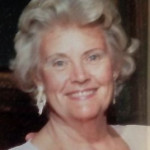
Pilgrim Marie McFadden
Just as I finished writing and prepared to publish this new eBook, my mother died. Marie Dolores Fitzsimmons McFadden was herself an inveterate pilgrim. Over the 92 1/2 years of her life she traveled to just about every region of the planet, and to an impressive number of sacred sites including Jerusalem, Rome, Fatima, Lourdes, El Sanctuario de Chimayo, St. Patrick’s Cathedral in Dublin, and many other places. To honor her memory, this new book is dedicated to her, as well as to all of us who are “on the road” in an era when extreme circumstances call out for our presence and our intelligent healing participation.
A Primer for Pilgrims delivers nonfiction insight, excitement, inspiration, adventure, and more. It’s available in 10 different eBook and Smartphone formats through Smashwords, and also available for Kindle through Amazon.com and for all Apple devices such as iPad and iPhone in the Apple bookstore.


 In a wealth of ways across a wide span of traditions and hundreds of generations, pilgrims have sought out holy places: forest groves, healing wells or springs, pyramids, mountains, churches, temples, stone circles or labyrinths.
Millions of people have made spiritual travels for a host of reasons.
A pilgrimage is a journey, not only outward to a faraway place, but also, inevitably, inward toward spiritual understanding and growth. In our era pilgrimage can be as well a critical geospiritual deed to help maintain the balance of our land, our planet, our lives.
A Primer for Pilgrims is a guide to personal spiritual growth, as well as to earth healing. It’s also a collection of true stories about critical geo-spiritual actions in North America This nonfiction book acknowledges, honors, draws from and strives to integrate the many cultures and traditions which have streamed onto Turtle Island (North America) over the last 500 years or so.
Author Steven McFadden walks the labyrinth.
The book offers insight about the challenges that arise in pilgrimage and the profound good that such a spiritual exercise may bring – not just for the individual pilgrims, but also for the world at large. Pilgrims may set out to do penance for past evils, to find answers to questions, to invoke blessings, to pursue spiritual ecstasy, or to seek a miracle for a friend or family member. Increasingly in our era, pilgrims also set out to help heal the earth.
In most mystical traditions it is said that the human soul itself, every human soul, is on a pilgrimage, consciously or unconsciously. He or she is bound for a holy place and therefore life is not just for enjoyment, but the soul also has dharma, a purpose or objective that must ever be kept in focus.
My hope as the author is that the book will offer up useful compass points to help you maintain your bearings.
To the extent any or all of us are alienated by modern life from the natural world, a pilgrimage to a sacred place can help heal and restore this. The energetic atmosphere of sacred places can awaken a slumbering soul, providing not only renewal, but also a clearer sense of purpose. The energy can invigorate and promote balance — assisting human beings to realign through physical, mental, and emotional planes.
A Primer for Pilgrims delivers nonfiction insight, excitement, inspiration, adventure, and more. It is available in 10 different formats through Smashwords, and also available for Kindle through Amazon.com and for all Apple devices such as iPad and iPhone in the Apple bookstore.

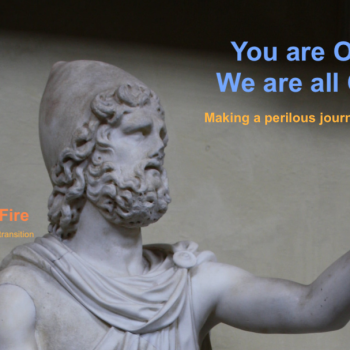 Your actual, real-time Odyssey parallels this Summer’s ‘blockbuster’ film
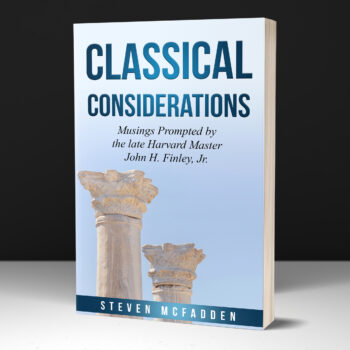 New and improved: Classical Considerations
 Behold the Light: Farms, Photons, Futures
 Our Collective Odyssey: Song and Story for the Generations Arising