I’m pleased to share this press release, just developed by a community of people who recognize the importance of community farms (CSAs), and who see the potential for enhancing our environment, improving our diets, supporting our local farmers, and cooperating for mutual benefit with our neighbors. ~ SM
Community Supported Agriculture (CSA) farms across the United States and Canada are setting roots more deeply in the land as they unite this year under a community-developed Charter for CSAs that provides a clear definition of what CSA farms are all about.

Logo for the CSA Charter by Ruth Blackwell
With 30 years of history and development, over 7,500 healthy, sustainable community farms have been established in the US, and many thousands more in Canada. These sustainable farms are directly networked with hundreds of thousands of households in the towns and cities where they are based and provide weekly shares of fresh, healthy, locally-grown food.
Together, regional networks and independent CSAs in the USA and Canada are banding together to launch an innovative and strengthening Charter for CSAs. The Charter will be inaugurated on CSA Sign-up Day, February 24, 2017.
CSAs that endorse the Charter are making a public commitment to uphold the principles and practices delineated in the Charter. It will provide a window of transparency for member households and for farmers, helping define and clarify what CSA farms are all about.
In the words of Elizabeth Henderson, CSA farmer and author of Sharing the Harvest, “CSA is a tremendously flexible concept for consumer-farmer connections. It’s an alternative system of distribution based on community values. The economics of direct sales make this a win-win solution for farmers and farm members. The farmer gets a decent price and the member pays less, since there is no middleman.”
“For the farmer,” she added, “CSA offers the possibility of a broad support group. Those groups are composed of local people who know about the farm, who genuinely care about it’s survival, and who are willing to share the farmer’s risks and rewards.
“In reciprocity, CSA farm members have the opportunity to eat fresh, healthy food, to connect with the earth, to know and trust in the people who grow their food, to deepen their understanding of seasonal eating, to support the local economy, and to take an empowered stance of accepting responsibility for one of our most basic needs.”
Anthony Graham, a farmer for 30 years at the Temple-Wilton Community Farm in New Hampshire, said, “When we started the Temple Wilton Community Farm, we were interested in community and in the ‘culture’ of agriculture. What we were attempting to set up was a way for a community of people to support the existence of a farm through good times and bad by making pledges of financial support over the course of one year. By agreeing to support the existence of the farm our members became co-farmers.”
You can find the full Charter for CSAs in the USA and Canada here, along with background information and a list of the CSAs that endorse it.
For more information, contact Elizabeth Henderson, elizabethhenderson13@gmail.com.
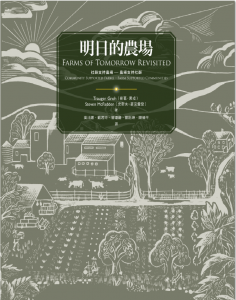
 Our book acknowledges that farming is not just a business like any other profit-making business, but a precondition of all human life on earth, and a precondition of all economic activity. As such, farming can be understood as everyone’s responsibility.
 Our community circle existed in time for just 91 minutes during Tierra Viva (Farming the Living Earth), the hemisphere-wide conference that was summoned into being by the
  practical and spiritual benefits arise for participants in CSA farming. CSA puts shareholders in greater tune with nature. This instinctual impulse to connect with the earth that sustains us is inherent in healthy people; consequently farming and gardening are healing and stabilizing for human beings, and of critical importance as we continue to face extreme and intensifying conditions in our digital era. Biodynamic principles and practices support and enhance all of this.
 “core groups” to create a strong and reliable network of farm support, similar to the way volunteer Boards of Directors serve food coops. While the CSA core group concept hasn’t been popular in CSAs in recent years, it does “take a village” to make a CSA work at the highest possible level. Considering the radically changing circumstances in climate, politics and economics, the core group model – drawing on collective intelligence and resources – is well worth re-considering.
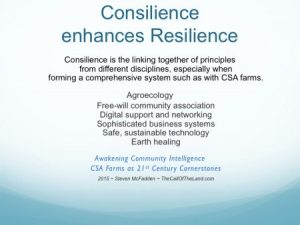 community awareness of environmental issues. CSAs connect people to the earth viscerally. Through that connection people become more firmly rooted in the places where they live and in the natural world, which supports life. Food is a binding impulse that can transcend political orientation. Food is an effective way to invite people into a real community conversation, and to combine their skills and resources to become more effectively and skillfully resilient in the face of the great challenges.
 mmunities often awaken late because of direct crisis, but they can also awaken from intelligent pursuit of models and opportunities. Dialogue can be a big factor in this; thus, it’s important to continue to articulate not just the economic and health dimensions of CSA farms, but also the social and ecological benefits.

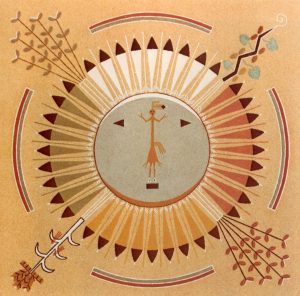

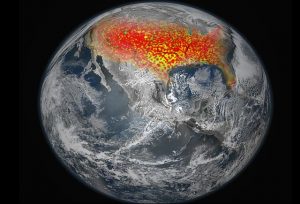 Our era is sharply marked by the mounting, menacing clouds of climate chaos, paralleled by dramatic and urgent shifts in global politics, economics, and social relations. Much more than a market strategy is required. I remain steadfast in my conviction that CSA can play a key role in addressing these issues. It’s time to expand exponentially the CSA vision and reality to hundreds of thousands of community farms around the world, and time also to evolve consciously the community and the associative economic dimensions of CSA.
 A rootstock is part of a plant, often an underground part, from which new above-ground growth can be produced. Grafting refers to the process by which a plant, sometimes just a stump with an established root system, serves as the base onto which cuttings (scions) from another plant are joined.
 Is there, or could there be, a biodynamic preparation that aids, nurtures and supports the grafting of the world’s wide array of cultural and agricultural traditions to the native rootstock and wisdom ways so inseparably a part of North America?

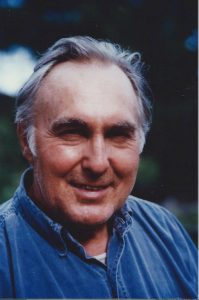
 As I entered into a series of deep and far-ranging conversations with him, Trauger gradually articulated the core ideas that found expression not only in CSA farms, but also in the books we eventually co-authored: Farms of Tomorrow in 1990, and
 Climate distortion has been speeding up