I’ve written this message often before, and I shall write it again. Community Farms (CSAs) are a sober and intelligent response to accelerating political and climate turbulence. Economic turbulence may follow. Time to act.
Regarding our overall situation as urgent, I’ve reported extensively about the ominously active factors bearing upon us all & the potentials of positive community action in collaboration with local farms. I’ve also recorded a ½-hour narrated slide show on these issues for Youtube (Awakening Community Intelligence) freely available to all for personal or community education.

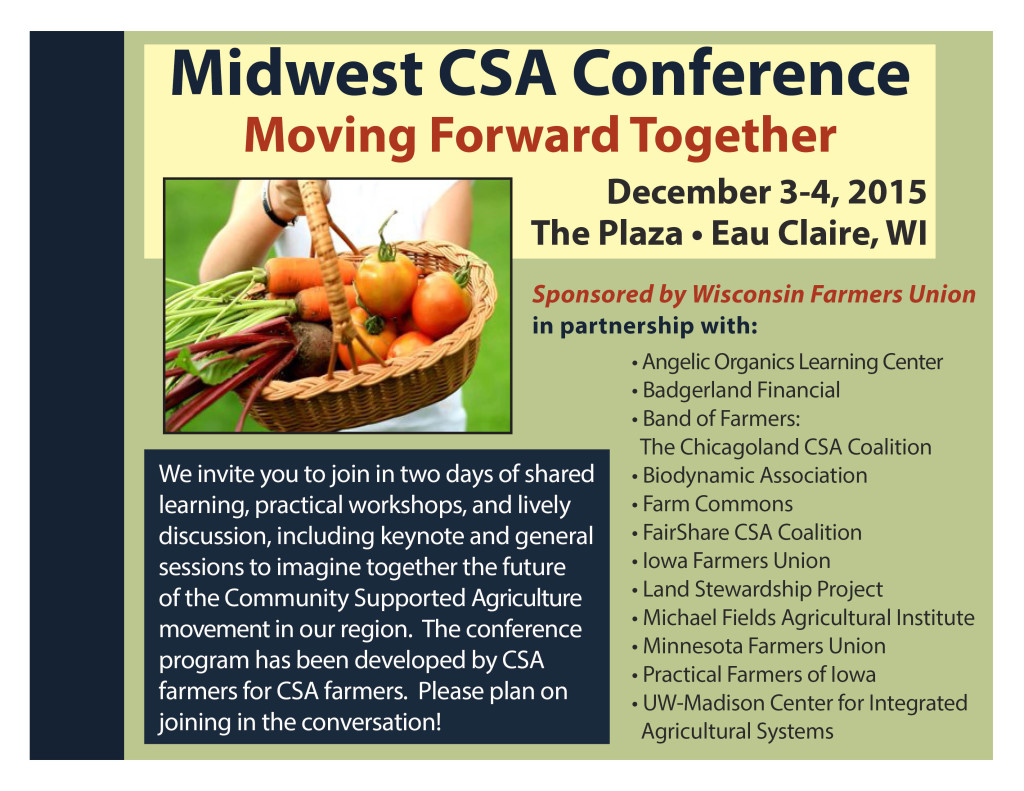
Early every year in both the USA and Canada, CSA Signup Day creates an opportunity for existing CSA farms to expand the community in support of what they are doing: clean land, clean food, enhanced local food security.
CSA signup day is also an opportunity for communities – neighborhoods, workplaces, churches and temples, suburbs, and so forth – to get busy establishing community farms, by the hundreds of thousands. It takes time to get a community farm together, but they can make a big stabilizing difference.
In conjunction with CSA signup day, as of 2017 there is a CSA Charter, which sets out the principles and practices that guide CSA farms in the USA and Canada. That’s a big step forward for evolving the community farm web in North America, in a time when big steps are immediately needed.
My most recent book about the CSA movement is Awakening Community Intelligence: CSA Farms as 21st Century Cornerstones.
 Our book acknowledges that farming is not just a business like any other profit-making business, but a precondition of all human life on earth, and a precondition of all economic activity. As such, farming can be understood as everyone’s responsibility.



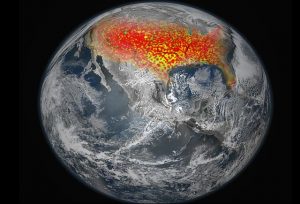 Our era is sharply marked by the mounting, menacing clouds of climate chaos, paralleled by dramatic and urgent shifts in global politics, economics, and social relations. Much more than a market strategy is required. I remain steadfast in my conviction that CSA can play a key role in addressing these issues. It’s time to expand exponentially the CSA vision and reality to hundreds of thousands of community farms around the world, and time also to evolve consciously the community and the associative economic dimensions of CSA.
 A rootstock is part of a plant, often an underground part, from which new above-ground growth can be produced. Grafting refers to the process by which a plant, sometimes just a stump with an established root system, serves as the base onto which cuttings (scions) from another plant are joined.
 Is there, or could there be, a biodynamic preparation that aids, nurtures and supports the grafting of the world’s wide array of cultural and agricultural traditions to the native rootstock and wisdom ways so inseparably a part of North America?



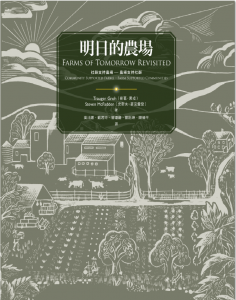
 As I entered into a series of deep and far-ranging conversations with him, Trauger gradually articulated the core ideas that found expression not only in CSA farms, but also in the books we eventually co-authored: Farms of Tomorrow in 1990, and